

 English
  日本語
日本語  Deutsch

Industry News
 Sep 24, 2026
 Posted by Administrator
Why Aluminum Cold Extrusion Outperforms Die Casting: The Complete Manufacturing Guide
Introduction: The Manufacturing Choice That Changes Everything
Two aluminum components may appear identical on a technical drawing, yet their performance in real-world applications can differ dramatically. The source of this difference often traces back to a single decision: the manufacturing process used to create them. For industries ranging from automotive and electronics to robotics and sensor systems, selecting between aluminum cold extrusion parts and die casting carries profound implications for component reliability, strength, and longevity.
While die casting dominates the manufacturing landscape for its ability to produce complex shapes quickly, it introduces a fundamental weakness that many engineers overlook: internal porosity. Gas entrapment during high-speed injection creates micro-voids throughout the material structure—invisible defects that reduce tensile strength, impair thermal conductivity, compromise pressure tightness, and accelerate fatigue crack initiation under cyclic loading.
Cold extrusion represents an alternative approach that addresses these limitations through a fundamentally different manufacturing philosophy. Rather than injecting molten metal at high speed, cold extrusion forces solid metal through precision dies at or near room temperature under sustained high pressure. The result is a dense, pore-free structure with continuous grain flow characteristics that die casting simply cannot achieve.
Understanding the Cold Extrusion Manufacturing Process
The cold extrusion process transforms raw aluminum into precision components through a carefully orchestrated sequence of steps. Each stage builds upon the previous one, with quality control measures embedded throughout to ensure consistency and reliability in the final part.
Step 1: Extrusion - Creating the Foundation
The process begins with heating an aluminum billet to optimal temperature and forcing it through a precision die under high pressure. This extrusion stage establishes the initial material flow lines and creates a preform that contains the approximate geometry of the final component. The extrusion temperature is carefully controlled to balance material flowability with the desired mechanical properties.
Step 2: Blanking - Precise Material Portioning
The extruded profile is cut into individual blanks of exact length. This blanking operation ensures consistent material volume for each subsequent part, which is critical because variations in blank weight lead directly to variations in final part density and mechanical properties. Precision blanking also minimizes material waste, contributing to overall process efficiency.
Step 3: Grinding - Surface Preparation
Before the blank enters the cold extrusion die, its surfaces are prepared through precision grinding. This step removes surface oxidation, contaminants, and minor defects that could interfere with the cold extrusion process or reduce die life. A clean, smooth surface allows the metal to flow predictably through the die and helps prevent die wear.
Step 4: Cold Extrusion - The Core Strengthening Process
The prepared blank is positioned in a cold extrusion die and subjected to extreme pressure—typically in the range of 600 to 6000 metric tons, depending on part complexity and size. At this pressure and ambient temperature, the solid aluminum deforms plastically, flowing into the die cavity while simultaneously undergoing work hardening. The plastic deformation increases dislocation density within the crystal lattice, which is the mechanism behind the improved strength that makes cold extrusion attractive for critical applications.
Unlike machining, which cuts through the grain structure and eliminates material, cold extrusion aligns grain flow along the part contour. This continuous grain orientation means that stress paths follow the material flow lines, resulting in superior fatigue resistance and impact strength compared to machined or cast alternatives.
Step 5: Magnetic Grinding - Achieving Surface Excellence
After extrusion, parts undergo magnetic grinding using fine abrasive particles suspended in a magnetic field. This finishing technique achieves low surface roughness (Ra values typically in the 0.4 to 1.6 micrometer range) and removes micro-burrs and surface irregularities. The resulting surface finish is critical for applications requiring tight sealing, precise fits, or aesthetic appearance.
Step 6: CNC Machining - Precision Finishing
Computer numerical control machining provides the final precision touches, creating features like threads, internal bores, and mating surfaces to specifications. CNC finishing typically achieves tolerances as tight as plus-or-minus 0.02 millimeters on critical dimensions, ensuring that components fit and function as intended in their final assemblies.
Step 7: Ultrasonic Cleaning - Contamination Removal
Before packaging, all parts undergo ultrasonic cleaning using high-frequency vibrations to dislodge and remove any remaining particles, chips, or contaminants. This step is essential for applications in automotive fuel systems, electronics enclosures, and sensor assemblies where internal cleanliness directly impacts reliability and performance.
Step 8: Full Inspection and Packaging
Every component undergoes 100-percent dimensional inspection of critical features before protective packaging for shipment. This comprehensive quality gate ensures that only conforming parts reach customers and enables manufacturers to maintain the defect levels (parts per million or PPM) that modern supply chains demand.
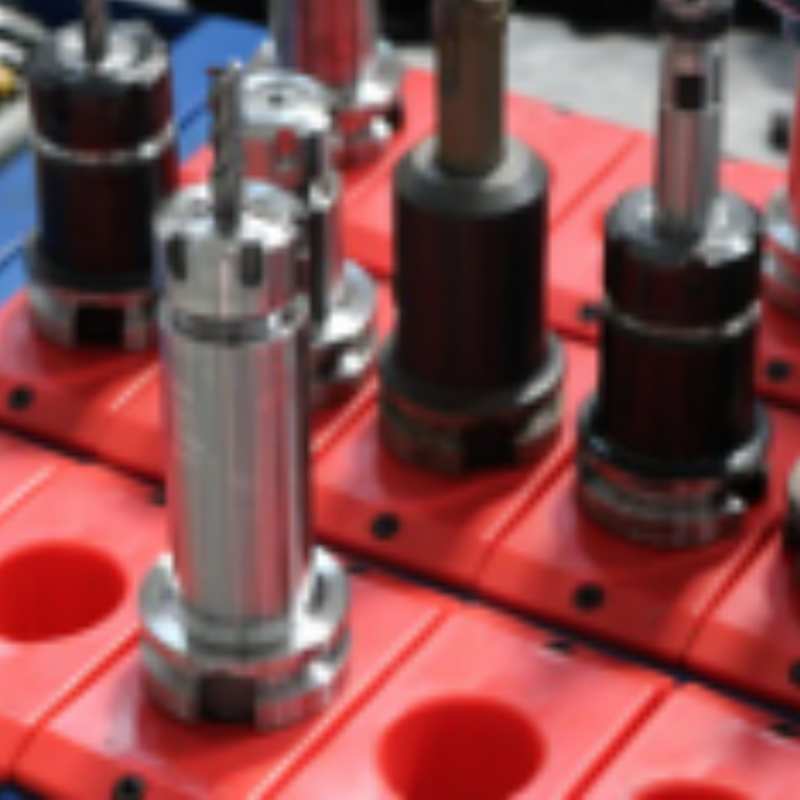
Cold Extrusion vs. Die Casting: A Technical Comparison
While die casting excels at producing geometrically complex shapes, cold extrusion dominates in strength-critical and density-critical applications. Understanding the technical trade-offs helps engineers select the appropriate process for their specific requirements.
Porosity and Density: The Fundamental Difference
Die casting introduces porosity through two mechanisms. First, high-speed injection traps gas bubbles within the molten metal. Second, solidification shrinkage creates additional voids. Combined, these mechanisms typically result in 2 to 5 percent porosity by volume. Cold extrusion, by contrast, forms solid metal under extreme pressure, eliminating both mechanisms and producing near-theoretical density.
Strength and Fatigue Performance
The pores in die-cast components act as stress concentrators, amplifying local stresses and serving as nucleation sites for fatigue cracks. Tensile strength typically ranges from 200 to 300 megapascals in die-cast aluminum, while work-hardened cold-extruded components achieve 300 to 450 megapascals. Fatigue performance differences are even more dramatic, with cold-extruded parts often outlasting die-cast alternatives by factors of 5 to 10 in cyclic loading applications.
Pressure Tightness
Die-cast components often require vacuum impregnation—a secondary process to seal internal porosity—before they can reliably hold pressure or operate as hydraulic components. Cold-extruded parts are inherently pressure-tight, eliminating this additional processing step and cost.
Thermal Conductivity
Porosity interrupts the continuous heat conduction path through the material. Cold-extruded components exhibit thermal conductivity of 200 to 230 watts per meter-kelvin, compared to 90 to 130 for die-cast aluminum—a performance advantage of 2 to 2.36 times. This makes cold extrusion the preferred choice for thermal management applications like heat sinks and power module housings.
Design Complexity vs. Mechanical Properties
Die casting excels at producing thin-walled, geometrically complex shapes that would be difficult or impossible with cold extrusion. However, this geometric advantage comes with mechanical property penalties. Cold extrusion, operating within geometric constraints, delivers mechanical properties that die casting simply cannot match.
| Property | Cold Extrusion | Die Casting |
|---|---|---|
| Porosity | Essentially pore-free | 2-5% typical |
| Yield Strength | 250-400 MPa | 150-250 MPa |
| Elongation | 8-15% | 3-8% |
| Hardness (HB) | 95-120 | 70-100 |
| Material Utilization | ~95% | ~90% |
| Design Flexibility | Moderate | High |
Why Density Matters: The Hidden Cost of Porosity
Material density is not merely a physical measurement—it is a fundamental indicator of component reliability and performance across multiple critical functions. Every percent of porosity reduces both mechanical and thermal properties, creating performance penalties that compound in demanding applications.
Mechanical Strength and Fatigue Life
Pores function as stress concentrators, elevating local stresses above nominal design values. Under static loading, this effect reduces tensile strength. Under cyclic loading—characteristic of automotive suspension components, robotics joints, and sensor mounts—pores become crack initiation sites. Research across multiple studies confirms that eliminating porosity extends fatigue life by factors of 5 to 10 for equivalent alloys and stress levels.
Pressure Tightness and Sealing
Interconnected porosity creates leak paths for gases and fluids. Die-cast hydraulic components often exhibit microleakage that only becomes apparent after assembly and pressurization. Cold-extruded components, with their near-theoretical density, are inherently pressure-tight and require no secondary sealing treatments.
Thermal Management Performance
Heat conduction through aluminum follows the continuous material path. Pores interrupt this path, forcing heat to travel around voids through reduced cross-sectional areas. This effect causes the 2.36-times thermal conductivity advantage observed in cold-extruded components. For cooling-intensive applications like power electronics, the density-thermal conductivity relationship directly impacts product reliability and lifespan.
Corrosion Resistance and Environmental Durability
In outdoor and corrosive environments, pores trap moisture and corrosive agents deep within the component. Anodizing and paint coatings cannot fully seal pores, leaving them as corrosion initiation sites. Dense, pore-free structures resist environmental attack more effectively, extending in-service life in automotive, marine, and infrastructure applications.
Manufacturing Quality Consistency
Dense components machine cleanly with predictable tool wear and consistent surface finish. Porous components exhibit variable machinability—tools sometimes strike voids, causing sudden edge breakage and poor finish. This variability increases scrap rates and rework costs in CNC finishing operations.
Key Insight:
A single percent reduction in density translates to measurable performance losses across strength, fatigue life, thermal conductivity, and corrosion resistance. In precision applications where failure is not acceptable, density is not an optimization variable—it is a design imperative.
Material Properties Comparison: The Numbers Behind Performance
Technical specifications provide concrete evidence of the mechanical and thermal advantages cold extrusion delivers compared to die casting. These values represent typical performance ranges for aluminum alloys processed through each method.
| Property | Cold Extruded | Die Casting | Testing Standard |
|---|---|---|---|
| Density (g/cm3) | ≥2.70 | 2.55-2.65 | Archimedes |
| Tensile Strength (MPa) | 300-450 | 200-300 | ASTM E8 |
| Yield Strength (MPa) | 250-400 | 150-250 | ASTM E8 |
| Elongation (%) | 8-15 | 3-8 | ASTM E8 |
| Hardness (HB) | 95-120 | 70-100 | ASTM E10 |
| Thermal Conductivity (W/m-K) | 200-230 | 90-130 | ASTM E1461 |
| Fatigue Resistance | Superior (pore-free) | Moderate (porosity-limited) | ASTM E466 |
| Pressure Tightness | Excellent (inherent) | Requires impregnation | Leak test methods |
Important Note: These values are representative ranges for equivalent aluminum alloys (typically 6061 or similar). Actual performance depends on specific alloy selection, heat treatment (if any), and precise process parameters. Consult material certificates and run confirmatory testing for critical applications.
Real-World Applications: Where Cold Extrusion Dominates
Across industries, cold-extruded aluminum components solve real engineering challenges that die casting cannot adequately address. The following applications illustrate where the strength, density, and thermal performance advantages become decisive factors in design and reliability.
Automotive Systems: Reliability Under Extreme Conditions
Automotive sensor housings must maintain dimensional stability and pressure tightness through temperature extremes, vibration, and thermal cycling. Cold-extruded components excel in these demanding environments because their dense structure resists corrosion and their work-hardened structure absorbs vibration without fatigue failure. Structural mounts, battery component housings, and fuel system fittings all benefit from the inherent pressure tightness that eliminates the need for additional sealing treatments.
Electronics and Power Management: Thermal Criticality
Power electronics generate intense localized heat that must be dissipated rapidly to prevent component failure. Heat sink performance directly correlates with thermal conductivity and contact surface density. Cold-extruded heat sinks deliver thermal performance that die-cast alternatives simply cannot match. Power module housings require both dimensional precision and pressure integrity—dual requirements where cold extrusion excels.
Robotics and Automation: Precision and Durability
Robotic joint housings experience millions of cyclic loading events over their operational lifespan. Die-cast components fail prematurely at these joints, with porosity-initiated cracks terminating service life far short of design targets. Cold-extruded joint components, with their superior fatigue resistance and tighter dimensional tolerances, extend service intervals and reduce maintenance costs significantly.
Unmanned Aerial Vehicles (UAV/Drone): Weight and Structural Integrity
Drone design demands the highest strength-to-weight ratios achievable. Every gram saved in structural components extends flight time and payload capacity. Cold-extruded motor mounts and airframe components achieve superior specific strength (strength per unit weight) compared to die-cast alternatives because material density is maximized and properties are work-hardened.
AI and Sensor Systems: Precision and Environmental Stability
Optical mounts, sensor enclosures, and thermal components for AI and sensor systems require extraordinary dimensional stability and protection from environmental contamination. Cold extrusion delivers the pore-free structure that prevents moisture infiltration and the dimensional consistency needed for precision optical alignment. The dense structure also provides superior shielding for sensitive electronics.
Industrial and Hydraulic Systems: Pressure and Durability
Hydraulic fittings, pneumatic component bodies, and machine mounting parts must maintain pressure tightness and resist fatigue under cyclic loading. Cold-extruded components eliminate the cost and complexity of post-cast impregnation treatments while delivering superior service life in these demanding applications.
Quality, Inspection, and Reliability: Building Confidence
Manufacturing capability alone does not guarantee customer satisfaction. Consistent quality, rigorous inspection, and documentation traceability are prerequisites for suppliers serving automotive, electronics, and sensor system industries where component failure carries high costs.
100-Percent Dimensional Inspection
Every component undergoes dimensional verification of critical features before shipment. This comprehensive approach, often called 100-percent inspection, enables manufacturers to maintain PPM (parts per million) defect rates that modern supply chains demand. Automated measurement systems and statistical process control (SPC) track trends and trigger preventive adjustments before defects occur.
Traceability and Documentation
Components manufactured through reputable cold extrusion suppliers include full traceability documentation linking each part to specific batch certificates, material specifications, and test results. This traceability enables rapid investigation of field issues and supports root-cause analysis when problems arise.
Surface Treatment and Corrosion Protection
Anodizing and powder coating are applied to cold-extruded components for corrosion protection and aesthetic finish. Dense, pore-free components anodize more evenly, producing consistent color and coating thickness. Secondary surface treatments are more cost-effective and deliver superior final performance on components without internal porosity.
Material Certification and Alloy Verification
Reputable manufacturers verify alloy composition and properties through certified test data. Aluminum alloy selection (6061, 6063, 7075, and others) directly impacts achievable mechanical properties. Material certificates confirm that received materials match specifications and that heat treatment (if required) has been properly applied.
Statistical Process Control and Continuous Improvement
Leading manufacturers employ SPC to monitor process parameters—pressure settings, temperature profiles, cooling rates—and correlate them to final component properties. This data-driven approach enables continuous improvement, reduces variability, and prevents excursions before defects occur.
- In-process monitoring detects abnormal conditions during manufacturing and triggers immediate corrective action
- Dimensional sampling across multiple measurement stations catches drift before parts leave specification
- Mechanical testing of first articles and process audits verify that setup parameters produce target properties
- Environmental testing simulates field conditions—temperature extremes, humidity, corrosive salt spray—to validate durability
- Leak testing confirms pressure tightness for components destined for sealed assemblies
- Ultrasonic inspection can detect internal defects and verify pore-free structure for critical applications
Design Considerations: Optimizing Components for Cold Extrusion
While cold extrusion is extremely versatile, designs optimized for the process deliver maximum performance and cost efficiency. Understanding design guidelines and constraints enables engineers to achieve superior results.
Geometric Feasibility
Cold extrusion excels at producing rounded features, thick walls, and simple cross-sections. Complex thin-walled geometries may be achievable but require higher pressures and multiple extrusion stages. Designers benefit from maintaining consistent wall thickness and avoiding sharp corners, which concentrates stress during forming and complicates die design.
Draft Angles and Tapering
Like all plastic deformation processes, cold extrusion benefits from slight draft angles (typically 1 to 3 degrees) on vertical surfaces. These angles facilitate component ejection from the die and reduce residual stress. Even slight tapering improves surface quality and extends die life.
Tolerancing Strategy
Cold extrusion as-formed tolerances are typically plus-or-minus 0.1 millimeter on simple features. CNC finishing improves this to plus-or-minus 0.02 millimeter for critical dimensions. Engineering tolerances should reflect what each feature requires for form and function rather than defaulting to the tightest achievable values. This strategy reduces unnecessary machining costs and lead times.
Material Selection
Aluminum alloy selection depends on the specific performance requirements. Alloys with good work-hardening response (such as 6061 and 6063) deliver superior strength through cold extrusion. Higher-strength alloys (7075) are available but require careful thermal management during forming. Material engineers can provide guidance on optimal alloy selection during design phase.
Post-Extrusion Processing
Cold extrusion produces components at or near final shape, minimizing subsequent machining. However, applications requiring high precision or complex features benefit from CNC finishing. Anodizing and powder coating add corrosion protection and aesthetic appeal without compromising the underlying strength advantages.
Design for Manufacturability (DFM):
Collaborate with the manufacturing team during design phase. Early feedback on geometry, wall thickness, and tolerance requirements prevents costly design iterations and optimizes both performance and cost. Manufacturers with integrated technology and engineering support can often suggest design improvements that improve reliability while reducing cost.
Frequently Asked Questions
Q1: What is the main difference between cold extrusion and die casting?
Cold extrusion forms solid aluminum under high pressure at room temperature, eliminating porosity and delivering superior strength and density. Die casting injects molten aluminum at high speed, which traps gas bubbles and creates internal voids. Cold extrusion produces pore-free components; die casting produces components with 2-5 percent porosity that reduces strength, thermal conductivity, and fatigue life.
Q2: Why does porosity in die-cast components matter?
Porosity acts as stress concentrators, reducing tensile strength and serving as crack nucleation sites under cyclic loading. Pores interrupt thermal conduction paths, reducing thermal conductivity. In pressure applications, pores create leak paths requiring secondary impregnation treatment. Cold extrusion eliminates these penalties through high-pressure consolidation that closes all pores.
Q3: How much stronger is cold-extruded aluminum compared to die-cast?
Tensile strength is typically 50 to 100 percent higher in cold-extruded components (300-450 MPa vs. 200-300 MPa). Fatigue strength advantages are even more dramatic, often favoring cold extrusion by factors of 5 to 10 in cyclic loading. These differences reflect both the elimination of porosity and the beneficial effects of work hardening.
Q4: Is cold extrusion suitable for complex geometries?
Cold extrusion is best suited for components with rounded features, consistent wall thickness, and simple cross-sections. Geometrically complex shapes are more feasible with die casting. However, for applications where strength and density are critical, designers often prefer cold-extruded components with added CNC machining over complex die-cast alternatives.
Q5: How tight are dimensional tolerances with cold extrusion?
As-formed cold extrusion tolerances are typically plus-or-minus 0.1 millimeter. CNC machining improves this to plus-or-minus 0.02 millimeter for critical features. Surface finish is typically 0.4 to 1.6 micrometers (Ra) as-formed, which is excellent and often requires no additional finishing for functional surfaces.
Q6: Do cold-extruded components require secondary sealing for pressure applications?
No. Cold-extruded components are inherently pressure-tight because the high-pressure forming process eliminates porosity. Die-cast components often require vacuum impregnation to seal internal pores before use in pressure applications. This eliminates a secondary processing step and associated cost for cold-extruded alternatives.
Q7: What surface treatments are available for cold-extruded aluminum?
Cold-extruded components readily accept anodizing, powder coating, chromate conversion coating, and mechanical finishing. The dense, pore-free surface produces uniform coating thickness and consistent color, superior to die-cast components. These treatments provide corrosion protection and aesthetic appeal while preserving the underlying strength advantages.
Q8: How does thermal conductivity compare between cold extrusion and die casting?
Cold-extruded components deliver 200-230 watts per meter-kelvin thermal conductivity, compared to 90-130 for die-cast aluminum—a 2 to 2.36-times advantage. This superior thermal performance makes cold extrusion the preferred choice for heat sinks, power electronics housings, and other cooling-intensive applications.
Q9: Can cold-extruded components undergo heat treatment?
Yes. Cold-extruded components can undergo solution heat treatment and precipitation hardening (T4, T6 heat treatment) to further increase strength. However, the work-hardened strength from cold extrusion is often sufficient, and additional heat treatment adds cost and lead time. Engineers should evaluate whether heat treatment provides additional performance benefit beyond the as-extruded condition.
Q10: What is the typical lead time for cold-extruded components?
Lead times depend on component complexity, tooling requirements, and order volume. Simple components from existing tooling can be delivered in 2-4 weeks. New tooling for custom designs typically requires 4-8 weeks for design, fabrication, and first-article verification. Larger production quantities reduce per-unit cost through amortization of tooling investment.
Q11: Are cold-extruded components more expensive than die-cast alternatives?
Per-unit costs are often comparable between cold extrusion and die casting at production volumes. Cold extrusion has moderate tooling costs and excellent material utilization (95% vs. 90%), offsetting any differences in process complexity. For pressure applications, cold extrusion's inherent pressure tightness eliminates secondary impregnation cost, making it cost-competitive or advantageous.
Q12: What aluminum alloys are recommended for cold extrusion?
6061 and 6063 are popular choices offering excellent work-hardening response and good corrosion resistance. 5083 and 5086 provide superior corrosion resistance for marine applications. 7075 offers maximum strength for aerospace applications but requires careful thermal management during forming. Material selection should match both the application requirements and the manufacturing process.
Conclusion: Strategic Manufacturing for Precision Components
The choice between cold extrusion and die casting is not merely a manufacturing decision—it is a strategic choice that determines component reliability, service life, and total cost of ownership in critical applications. While die casting excels at geometric complexity, cold extrusion dominates where strength, density, thermal performance, and reliability are non-negotiable requirements.
Key Performance Advantages
- Strength: Work-hardened structure and pore-free consolidation deliver 50-100% higher tensile strength
- Density: Near-theoretical density of 2.70 g/cm³ ensures pressure tightness and consistent mechanical properties
- Thermal Performance: 2-2.36 times superior thermal conductivity makes cold extrusion essential for cooling applications
- Fatigue Resistance: Continuous grain flow and pore-free structure extend cyclic life by factors of 5-10
- Cost Efficiency: Material utilization of 95%, near-net shape, and no secondary sealing treatments optimize total cost
Selecting Your Manufacturing Partner
Optimal results require partnering with manufacturers possessing integrated capabilities spanning extrusion, cold forming, precision machining, surface treatment, and comprehensive quality systems. Look for partners with:
- Multiple extrusion lines supporting diverse tonnage ranges and throughput requirements
- Integrated process control from billet selection through final packaging
- CNC machining capabilities for precise finishing and rapid response to design changes
- Surface treatment facilities for anodizing, powder coating, and corrosion protection
- Comprehensive quality systems including 100-percent inspection and statistical process control
- Engineering support for design optimization and Design for Manufacturability (DFM) feedback
- Export experience ensuring smooth international delivery and compliance with global standards
- Documented track record serving demanding industries including automotive, electronics, and sensor systems
Next Steps
If your applications require superior strength, environmental durability, or thermal performance, cold extrusion merits serious consideration. Engage with potential aluminum cold extrusion parts suppliers early in design phase to optimize component geometry, material selection, and manufacturing processes. Request material certificates, dimensional samples, and environmental test data to verify that proposed solutions meet performance requirements.
Cold extrusion has enabled precision manufacturers to deliver components that survive extreme conditions and cyclic stresses for decades. As products demand higher reliability and longer service life, the strength, density, and thermal performance advantages of cold extrusion become increasingly valuable.

-
Tel Number
+86-0572-2210226Phone Number
+86-13819283977 +86-13655726561 +86-13567228000Address
Building B, Innovation and Entrepreneurship Industrial Park, No. 288, Yansan Road, Huzhou City, Zhejiang Province, ChinaQrCode
-
Quick Links
Home Products About Us Capabilities Industries News Contact Us -
Explore
Aluminum Camera Shell Of Vehicle Aluminium Cold Extrusion Aluminium Cold Forging Parts -
feel free to contact us
