

 English
  日本語
日本語  Deutsch

Industry News
 Sep 18, 2026
 Posted by Administrator
Custom OEM & ODM Service for Precision Aluminum Cold Extrusion Parts
Why Precision Aluminum Cold Extrusion Matters in Modern Manufacturing
The global demand for high-precision metal components continues to accelerate across automotive, electronics, robotics, and industrial sectors. Organizations that once handled all manufacturing in-house now recognize the strategic advantage of partnering with specialized OEM and ODM manufacturers. These partners bring deep expertise, advanced equipment, and optimized processes that reduce time-to-market and enhance product quality.
Cold extrusion—a metal forming process conducted at or near room temperature—has emerged as a preferred method for producing precision aluminum cold extrusion parts. Unlike traditional machining or other forming processes, cold extrusion delivers near-net shapes with exceptional dimensional accuracy, superior surface finish, and enhanced mechanical properties through work hardening. For businesses seeking to scale production without massive capital investment, understanding OEM versus ODM partnerships is essential.
This article provides a comprehensive guide to navigating OEM and ODM services for precision aluminum cold extrusion, evaluating manufacturing partners, and executing successful projects from design to delivery.
Understanding Cold Extrusion: Process Fundamentals
What Is Cold Extrusion?
Cold extrusion is a metal forming technique in which a metal blank is forced through a die at room temperature or slightly elevated temperatures under extremely high pressure. Unlike hot extrusion, which requires heating the metal, cold extrusion produces components without thermal distortion, resulting in superior dimensional accuracy and mechanical properties. The process generates near-net shapes, meaning the final part requires minimal secondary machining—a significant cost and time advantage.
The Multi-Stage Production Workflow
Achieving consistent, high-quality precision components involves a structured sequence of operations. Here is the typical process flow:
Each stage serves a critical purpose: extrusion creates the basic form, blanking removes excess material, grinding prepares surfaces, cold extrusion applies the final shape under high pressure, magnetic grinding removes magnetic particles, CNC machining achieves final tolerances, ultrasonic cleaning removes contaminants, and comprehensive inspection ensures quality before packaging.
Key Advantages of Cold Extrusion for Precision Parts
- Dimensional Accuracy: Typical tolerances of ±0.1mm are standard; CNC finishing can achieve ±0.02mm for critical dimensions.
- Superior Surface Finish: Near-net shape production minimizes secondary finishing, preserving surface quality and reducing manufacturing time.
- Enhanced Mechanical Properties: Work hardening during the cold extrusion process increases strength without thermal degradation of material properties.
- Material Efficiency: Approximately 95% material utilization compared to 60-70% for traditional machining methods.
- Strength-to-Weight Ratio: Ideal for applications where weight reduction and structural integrity are both critical.
- Thermal Conductivity: Aluminum's excellent heat dissipation makes cold-extruded components suitable for thermal management applications.
Material Selection for Cold Extrusion
Different aluminum alloys offer distinct characteristics suited to specific applications:
| Alloy Grade | Key Characteristics | Typical Applications |
|---|---|---|
| Al1070 | High purity, excellent heat dissipation, reliable laser welding capability | Thermal components, electrical housings |
| 6061 | Good corrosion resistance, moderate strength, excellent workability | Structural components, fittings |
| 6063 | Superior extrusion characteristics, excellent surface finish potential | Decorative and architectural parts |
| 7075 | High strength-to-weight ratio, excellent fatigue resistance | Aerospace, robotics, high-stress applications |
OEM Services: Bringing Your Design to Life
OEM (Original Equipment Manufacturer) services mean that you provide the design, specifications, and requirements, while the manufacturing partner handles production to your exact standards. This model works well when you have a proven design or specific technical requirements that need precise execution.
What You Provide in an OEM Partnership
- Complete 2D or 3D technical drawings with all dimensions and tolerances clearly defined
- Material specifications and performance requirements
- Surface finish specifications and any special coating or treatment requirements
- Volume forecasts and production schedule expectations
- Quality standards, inspection criteria, and any required certifications
- Assembly constraints and compatibility requirements with other components
What an OEM Partner Delivers
- Design for Manufacturability (DFM) Feedback: Analysis of your design to identify potential manufacturing challenges and suggest improvements that reduce cost and lead time without compromising function.
- Tooling Design and Fabrication: Custom die and tool design, in-house manufacturing of all required tooling, ensuring precise execution of your specifications.
- Sample Production: Initial sample runs to validate the design, tooling, and process before committing to mass production.
- Mass Production: Reliable, consistent execution of cold extrusion, CNC finishing, surface treatment, and assembly as required.
- Quality Inspection: Comprehensive dimensional inspection, material certifications, process documentation, and adherence to your quality standards.
- After-Sales Support: Ongoing technical support, process optimization assistance, and continuous improvement initiatives.
Advantages of Integrated OEM Manufacturing
The most efficient OEM partnerships involve manufacturers with integrated capabilities spanning extrusion, cold extrusion, CNC machining, and surface treatment all under one roof. This integration delivers several advantages:
- Reduced Lead Times: No external handoffs or waiting periods between manufacturing stages; seamless internal workflow.
- Quality Consistency: Single organization controls all processes, ensuring uniform standards and accountability.
- Cost Optimization: Elimination of inter-facility logistics, reduced overhead, and better inventory management.
- Responsive Problem-Solving: Engineering teams can quickly address issues or implement design changes without coordinating across multiple suppliers.
- Supply Chain Simplification: Single point of contact and billing, streamlined communication, and comprehensive documentation.
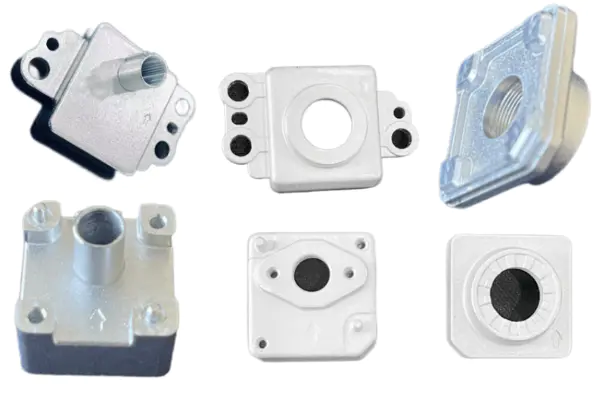
ODM Services: Collaborative Product Development
ODM (Original Design Manufacturer) services involve the manufacturing partner contributing design, engineering expertise, and development capability alongside you. This approach is ideal when you need a product solution but lack internal design resources, want to accelerate time-to-market, or benefit from the manufacturer's specialized knowledge in a particular domain.
The ODM Value Proposition
In an ODM engagement, you provide the market requirements and strategic direction; the manufacturer contributes product development expertise, prototype testing, design iteration, and a path to mass production. This partnership model democratizes access to advanced manufacturing—you can bring products to market without maintaining a large internal engineering team.
What You Contribute to an ODM Project
- Clear articulation of application requirements and performance targets
- Size constraints, interfaces, and compatibility requirements
- Volume estimates and desired product lifecycle
- Branding and market positioning requirements
- Target cost expectations and acceptable price-to-performance trade-offs
- Feedback on prototypes and design iterations
What an ODM Partner Delivers
- Concept Design: Initial design concepts that meet your functional requirements and performance targets.
- Material Selection: Recommendation of optimal materials based on performance, cost, and manufacturability considerations.
- Functional Prototyping: Development and production of working prototypes for testing and validation.
- Design Validation and Testing: Comprehensive testing to verify mechanical properties, dimensional stability, thermal performance, and reliability.
- Design Iteration: Refinement of designs based on test results and your feedback, optimizing for manufacturability and cost.
- Production-Ready Documentation: Complete technical specifications, process parameters, tooling designs, and quality standards ready for mass production.
- Intellectual Property Support: Clear documentation of design ownership, process know-how transfer, and licensing arrangements based on your agreement.
Accelerating Time-to-Market Through ODM
Manufacturers with deep experience in aluminum alloy development and a portfolio of proven designs can dramatically accelerate your project timeline. Rather than starting from a blank slate, ODM partners leverage:
- Existing material databases and performance data
- Proven design patterns for common applications (sensor housings, thermal components, structural elements)
- Validated manufacturing processes that minimize risk during scale-up
- Parallel engineering workflows that compress development schedules
- Established quality and testing protocols
Essential Capabilities for OEM and ODM Excellence
Not all aluminum extrusion manufacturers can effectively serve OEM and ODM customers. Successful partnerships require specific technical capabilities and organizational practices. Here is what to evaluate:
In-House Tooling and Die Making
Tooling quality directly impacts part quality and production consistency. Manufacturers with in-house die-making capabilities control both lead time and precision. When evaluating a partner, ask about:
- Die-making equipment and technology (CNC, EDM, grinding)
- Typical tooling lead times for new designs
- Experience with complex multi-cavity tooling
- Capability to modify tooling for design iterations
Extrusion Capacity and Equipment
Production capacity should match your volume requirements with headroom for growth. Key evaluation points:
- Number of extrusion lines and their tonnage ratings (typically ranging from 600 to 6000 tons)
- Flexibility to handle both small pilot runs and large-volume production
- Capability for both hot and cold extrusion processes
- Regular equipment maintenance and upgrade practices
CNC Machining Centers
CNC finishing is essential for achieving tight tolerances. Look for:
- Mix of 3-axis, 4-axis, and 5-axis CNC centers
- Capacity for both small parts and large components
- High-speed spindle capabilities for efficient material removal
- Automated tool changers and part handling for consistent cycle times
Surface Treatment Capabilities
Anodizing and powder coating provide corrosion resistance, aesthetic appeal, and functional properties. Essential capabilities include:
- Multiple anodizing lines with type I, II, and III options
- Powder coating lines with color variety and finish options
- Specialized coatings for specific environments (marine, industrial, medical)
- Quality control protocols for coating thickness and adhesion
Quality Management Systems
Consistency and traceability are non-negotiable for precision components. Verify:
- Industry certifications (IATF 16949 or equivalent)
- Documented quality management system with defined procedures
- Parts per million (PPM) performance metrics and historical trends
- Dimensional inspection capability (Coordinate Measuring Machines)
- Material traceability and certification practices
- Process documentation and statistical process control
Engineering Support and Design Collaboration
The quality of technical support can determine project success. Assess:
- Size and experience of the engineering team
- Depth of experience with your target applications (automotive, electronics, robotics, etc.)
- Capability to perform DFM analysis and tolerance stack-up calculations
- FEA (Finite Element Analysis) capability for complex components
- Materials science expertise for alloy selection and thermal analysis
Supply Chain Integration
For complex assemblies, the ability to coordinate related components is valuable:
- Established partnerships with suppliers of plastic, stainless steel, and fastener components
- Capability to coordinate multi-supplier delivery for complete assemblies
- Inventory management and just-in-time delivery coordination
Export Experience and Compliance
For international customers, manufacturing experience with global markets matters:
- Export experience to multiple countries and regions
- Familiarity with international quality standards and certifications
- Customs documentation and logistics expertise
- Currency management and payment flexibility
- English-language communication and documentation capabilities
The OEM/ODM Journey: From Inquiry to Delivery
Successful projects follow a structured process with clear stages, defined deliverables, and quality checkpoints. Here is the typical workflow:
Stage 1: Initial Inquiry and Requirements Definition
Share your detailed requirements with the manufacturer. For OEM projects, this includes complete drawings and specifications. For ODM projects, this includes functional requirements, performance targets, and application context. The manufacturer conducts a preliminary feasibility assessment and identifies any clarifying questions.
Stage 2: Design for Manufacturability (DFM) Analysis
The manufacturer's engineering team analyzes your design (OEM) or proposed concept (ODM) for manufacturing feasibility. This stage identifies potential challenges such as:
- Tight tolerances that require additional grinding or CNC finishing
- Complex geometries that impact tooling design or production cost
- Material selection issues or thermal concerns
- Assembly or integration challenges
The outcome is a detailed DFM report with recommendations, an optimized design (if applicable), and a formal quotation.
Stage 3: Tooling and Sample Production
Upon quotation approval, the manufacturer proceeds with detailed tooling design. Dies and molds are fabricated to precise specifications. The manufacturer then produces an initial batch of sample parts under controlled conditions. Samples undergo comprehensive inspection and testing to validate the process before moving to mass production.
Stage 4: Sample Review and Approval
You receive samples for inspection and testing. Dimensional inspection, material verification, surface quality assessment, and functional testing (if applicable) confirm that samples meet specifications. Feedback is provided, and if necessary, minor adjustments are made to the tooling or process before approval.
Stage 5: Production Setup and Mass Production
After sample approval, the manufacturer sets up the production environment. This includes:
- Scheduling extrusion line time and CNC machine capacity
- Pre-production runs to validate tooling under full production conditions
- Quality system setup with inspection schedules and control points
- Staffing and training to ensure consistent execution
Mass production proceeds according to your delivery schedule with continuous quality monitoring.
Stage 6: Final Inspection and Packaging
Completed parts undergo comprehensive inspection including dimensional verification, surface quality assessment, material certification review, and documentation. Parts are then carefully packaged according to your specifications with appropriate protective materials and labeling.
Stage 7: Delivery and After-Sales Support
Shipment is arranged to your facility with all relevant documentation (certificates of conformance, inspection reports, shipping documents). After delivery, the manufacturer remains available for technical support, process optimization, and any issues that arise during your use of the components.
Quality Assurance: Ensuring Consistency and Reliability
Precision aluminum components serve critical functions in their applications. Whether in automotive safety systems, aerospace structures, or medical devices, manufacturing quality directly impacts performance and reliability. Here is how leading manufacturers maintain quality across OEM and ODM engagements:
Dimensional Accuracy and Tolerance Management
Precision components require tight tolerance control. This begins with:
- Process capability analysis: Statistical verification that the manufacturing process can consistently produce parts within specified tolerances
- Coordinate Measuring Machine (CMM) inspection: Comprehensive dimensional verification of a defined sample rate from each production batch
- Tolerance stack-up analysis: During design phase, verification that accumulated tolerances across multiple features do not compromise fit or function
- First-piece inspection: Full inspection of the first part from a new die or after any tooling modification
Surface Quality and Finish Consistency
Surface properties affect both aesthetics and function (corrosion resistance, electrical conductivity, etc.). Manufacturers monitor:
- Surface roughness: Periodic measurement using profilometry to ensure consistency
- Anodizing quality: Layer thickness measurement and adhesion testing
- Cleanliness: Ultrasonic cleaning validation and residue testing
- Visual inspection: Trained inspectors checking for scratches, dents, surface defects
Material Property Verification
Aluminum alloy properties directly impact component performance. Quality assurance includes:
- Mill certificates: Documentation from aluminum suppliers confirming alloy composition and properties
- Hardness testing: Verification that work-hardening from cold extrusion achieves expected strength levels
- Tensile testing: Periodic sampling and testing to confirm yield strength and elongation
- Metallurgical analysis: For critical applications, microstructure verification through microscopy
Process Consistency and Statistical Control
Manufacturing processes must operate within defined control limits:
- Statistical Process Control (SPC): Real-time monitoring of key process parameters with control charts
- PPM tracking: Detailed defect tracking to measure and trend parts per million rejection rates
- Process capability indices (Cpk): Calculation and monitoring to ensure processes remain capable
- Preventive maintenance: Scheduled equipment maintenance to prevent capability degradation
Traceability and Documentation
Comprehensive documentation enables accountability and investigation of any issues:
- Material lot traceability: Each production batch linked to the specific aluminum ingot used
- Process parameters: Recording of extrusion pressure, die temperature, CNC tool offsets, etc.
- Inspector identification: Inspection records include the identity of the inspector and inspection date/time
- Corrective action records: Documentation of any out-of-spec conditions, root cause analysis, and corrective actions
Applications for Precision Aluminum Cold Extrusion Parts
Cold extrusion's combination of strength, precision, and material efficiency makes it ideal for demanding applications across multiple industries. Here are the primary sectors where precision extruded aluminum components excel:
Automotive and Transportation
The automotive industry demands lightweight components with high strength and excellent dimensional stability. Precision cold-extruded aluminum parts are used in:
- Structural reinforcement members and brackets
- Sensor housings for advanced driver assistance systems (ADAS) and autonomous vehicles
- Motor mounts and thermal management components
- Battery enclosures and thermal interfaces for electric vehicles
The lightweight nature of aluminum reduces vehicle weight, improving fuel efficiency and electric vehicle range, while the material's thermal conductivity supports thermal management in high-performance applications.
Electronics and Consumer Devices
Miniaturization and thermal management are critical in consumer electronics. Cold extrusion enables:
- Heat sinks and thermal dissipation components for processors and power electronics
- Precision enclosures for smartphones, tablets, and wearables
- Connector housings with tight dimensional tolerances
- Shielding components for electromagnetic compatibility
Robotics and Automation
Robotics demands components combining lightweight design, precision, and fatigue resistance. Applications include:
- Joint housings and linkage components for robotic arms
- Actuator bodies and coupling components
- Sensor enclosures requiring precise mounting surfaces
- Structural frames requiring excellent strength-to-weight ratios
Aerospace and Unmanned Systems
Aerospace applications demand the highest material properties and quality standards. Cold extrusion serves:
- Airframe components and fuselage reinforcement
- Motor mounts and vibration isolation components
- Thermal management components for avionics and power systems
- Structural elements in unmanned aerial vehicles (UAVs)
Industrial and Machinery
Industrial equipment benefits from the durability and precision of cold-extruded components:
- Machine tool components and precision fixtures
- Hydraulic and pneumatic component housings
- Pump and valve bodies requiring tight tolerances
- Structural elements in manufacturing equipment
Emerging Applications
Growing sectors are increasingly turning to precision aluminum components:
- Artificial Intelligence Systems: Thermal management and structural components for AI servers and data center equipment
- Sensor and IoT Devices: Compact, thermally stable housings for sensor arrays and IoT systems
- Medical Devices: Precision housings and components for diagnostic and therapeutic equipment
- Renewable Energy: Components for solar tracking systems, wind turbine assemblies, and energy storage systems
Choosing the Right OEM/ODM Partner: A Practical Evaluation Framework
Selecting a manufacturing partner is a strategic decision that impacts your product quality, costs, timeline, and long-term business success. Here is a structured approach to evaluating and choosing the right partner:
Core Capabilities Assessment
Start by verifying that the potential partner has the foundational capabilities you need:
| Capability | What to Evaluate | Red Flags |
|---|---|---|
| Equipment & Capacity | Number and size of extrusion lines; CNC center count and types | Limited equipment; no CNC capability; outdated technology |
| Tooling Capability | In-house die making; typical tooling lead times; design change capability | Outsourced tooling; long lead times; unwilling to modify tooling |
| Quality Systems | IATF 16949 or ISO 9001; documented procedures; PPM history | No certifications; vague quality procedures; poor PPM performance |
| Engineering Support | Experienced engineers; DFM capability; design support track record | Limited technical staff; no design experience; poor communication |
Experience and Track Record
Assess the manufacturer's experience with projects similar to yours:
- Experience in your target industry (automotive, electronics, aerospace, etc.)
- Track record with projects of similar complexity and volume
- Case studies or references from comparable customers
- Portfolio of products demonstrating capability and quality
- Longevity in business and stability (not recently acquired or financially distressed)
Responsiveness and Communication
Effective partnership requires reliable communication and responsive support:
- Prompt response to inquiries and questions
- English language capability (or translation support) for your business needs
- Clear documentation and specifications provided
- Willingness to provide samples and data you request
- Designated technical point of contact for your project
- Proactive communication of timelines and potential issues
Cost Transparency and Structure
Clear pricing builds trust and prevents surprises:
- Detailed quotations that break down tooling costs, piece price, and minimums
- Clarity on NRE (Non-Recurring Engineering) charges and what is included
- Sample cost structure and any minimum sample quantities
- Transparency about price adjustments due to material costs or production changes
- Volume discount structure and terms
Scalability and Support for Growth
Consider your business growth trajectory:
- Capacity to scale from pilot runs to high-volume production
- Ability to support multiple product variants or derivative designs
- Capability for design modifications or continuous improvement
- Long-term supply security and strategic commitment to your business
Supplier Evaluation Checklist
Before making a final decision, complete this checklist to ensure you have assessed all critical factors:
- Reviewed facility in person or through detailed video tour
- Verified quality certifications and requested audit results
- Reviewed at least two years of PPM data
- Received and evaluated samples (if applicable)
- Confirmed engineering team experience and availability
- Reviewed written quotation with clear pricing and terms
- Confirmed capacity for your initial and projected volume
- Verified export experience and logistics capability
- Discussed intellectual property and confidentiality agreements
- Confirmed terms of payment and delivery
- Established communication protocols and response time expectations
- Reviewed references from existing customers in similar industries
Moving Forward: Your Path to Precision Manufacturing
Precision aluminum cold extrusion parts represent a mature, cost-effective solution for components requiring high dimensional accuracy, excellent surface finish, and enhanced mechanical properties. Whether you choose OEM services to manufacture a proven design or ODM services to develop a new product, selecting the right manufacturing partner determines your success.
The most effective partnerships begin with clear communication about requirements, realistic timelines, and mutual commitment to quality. A partner with integrated capabilities—spanning extrusion, cold extrusion, CNC machining, and surface treatment—provides efficiency and control that external coordination cannot match.
As you evaluate potential partners, prioritize integrated capabilities, proven quality systems, responsive engineering support, and export experience. These factors separate manufacturers who simply produce components from true partners who contribute to your product success.
The journey from concept to production—whether through OEM or ODM services—is well-defined and proven. By understanding each stage, evaluating partners systematically, and committing to a collaborative approach, you can access world-class precision manufacturing without the capital investment of in-house capability.
Frequently Asked Questions
Q1: What is the key difference between OEM and ODM services?
OEM (Original Equipment Manufacturer) services involve you providing the complete design and specifications, while the manufacturer produces to your requirements. ODM (Original Design Manufacturer) services involve the manufacturer contributing design and engineering expertise, developing a product based on your functional requirements that you then brand and sell. Choose OEM if you have a proven design; choose ODM if you need design expertise and want to accelerate time-to-market.
Q2: How long does it typically take from initial inquiry to mass production?
Timeline varies based on project complexity and manufacturer efficiency. A simple OEM project with proven design might proceed through DFM, tooling, sampling, and approval in 8-12 weeks. An ODM project involving concept development, prototyping, testing, and iteration typically requires 12-20 weeks. Expedited programs can compress timelines, though often at increased cost. During your initial quotation stage, request a detailed project schedule from your potential partner.
Q3: What tolerances can cold extrusion achieve?
Cold extrusion typically achieves dimensional tolerances of ±0.1mm for standard features. With additional CNC finishing, tolerances of ±0.02mm or tighter are achievable on critical dimensions. Surface roughness from cold extrusion is generally excellent (Ra 0.4-0.8 micrometers), often requiring no additional finishing. Your dimensional requirements and specific features will influence whether additional CNC finishing is necessary and cost impact.
Q4: Are there minimum order quantities for cold extrusion projects?
Minimum order quantities depend on your tooling strategy and the manufacturer's capabilities. For production parts after tooling approval, minimums typically range from 500 to 5,000 pieces depending on part complexity and your cost targets. However, you might negotiate lower minimums for samples and pilot runs. During quotation, clarify minimum quantities for samples, pre-production runs, and full production to plan your business accordingly.
Q5: How do I ensure quality consistency across production runs?
Quality consistency depends on your partner's systems and your oversight. Ensure your manufacturer has IATF 16949 or equivalent certification, documented quality procedures, and statistical process control capabilities. Request quarterly PPM reports to track defect trends. Specify inspection frequency and documentation requirements in your purchase agreement. Consider periodic third-party audits for high-volume or safety-critical applications. Clear quality specifications from the outset prevent misunderstandings.
Q6: Can aluminum parts be treated with special coatings or finishes?
Yes, aluminum parts support multiple surface treatments. Anodizing (Type I, II, or III) provides corrosion resistance and can be dyed for color. Powder coating offers durability and aesthetic variety. Passivation prevents white corrosion. Specialized coatings for medical, aerospace, or extreme environments are available. Discuss coating requirements with your manufacturer during the design phase, as some coatings may affect tight tolerances or require additional processing steps.
Q7: What happens if I need to modify a design during production?
Design changes during production create schedule and cost impacts. Minor changes (hole size, location, surface finish) might be accomplished with tooling modifications if the tooling design permits. Major changes (geometry, material, or feature additions) typically require new tooling. Your manufacturing contract should define change control procedures. Establish a clear process with your partner: review proposed change, assess impact, approve or reject, and document any cost and schedule adjustments.
Q8: How do I protect my intellectual property in an ODM relationship?
Intellectual property arrangements in ODM relationships should be clarified in your partnership agreement before development begins. Typical arrangements include: you retain full ownership of the design, you share ownership with the manufacturer, or the manufacturer retains the design but you have exclusive rights for your market segment. Specify confidentiality obligations, restrictions on the manufacturer's use of design data, and any technology transfer or licensing terms. Clearly documented IP terms prevent disputes and enable successful long-term partnerships.
Q9: What is the lead time for custom tooling?
Tooling lead time depends on design complexity and manufacturer capacity. Simple single-cavity dies might be completed in 4-8 weeks. Complex multi-cavity tooling or expedited schedules could extend to 12+ weeks. During quotation, request a detailed tooling schedule including design review, CAM programming, die machining, and testing phases. Expedited tooling is often possible but may incur rush charges. Clarify whether the quoted tooling lead time is on the critical path or can overlap with other activities.
Q10: How do manufacturers ensure material traceability?
Leading manufacturers implement comprehensive traceability systems linking each production batch to the aluminum ingot source, alloy certification, processing lot number, and production date. Material mill certificates confirm alloy composition and mechanical properties. Each production run is tagged with lot identification, typically through color-coded packaging or labeling. This enables rapid investigation if material-related issues arise and provides documentation for quality audits. Request your manufacturer's traceability documentation to verify their system meets your requirements.

-
Tel Number
+86-0572-2210226Phone Number
+86-13819283977 +86-13655726561 +86-13567228000Address
Building B, Innovation and Entrepreneurship Industrial Park, No. 288, Yansan Road, Huzhou City, Zhejiang Province, ChinaQrCode
-
Quick Links
Home Products About Us Capabilities Industries News Contact Us -
Explore
Aluminum Camera Shell Of Vehicle Aluminium Cold Extrusion Aluminium Cold Forging Parts -
feel free to contact us
