

 English
  日本語
日本語  Deutsch

Industry News
 Aug 21, 2026
 Posted by Administrator
Cold Forging vs. Traditional CNC Machining for High-Precision Electronic Components
Electronic component manufacturers face a critical decision when scaling production: should you invest in cold forging dies or rely on the flexibility of CNC machining? This choice directly impacts your product's strength, thermal efficiency, manufacturing cost, and time-to-market. While both processes deliver precision, they serve fundamentally different production scenarios and component requirements.
This comprehensive comparison examines six key performance dimensions—cost structure, production speed, material properties, dimensional accuracy, surface finish, and application suitability—to help you select the optimal manufacturing path for your electronic components. Whether you're developing sensor housings, thermal management systems, or structural enclosures, understanding these tradeoffs ensures you achieve the right balance of performance, cost, and scalability.
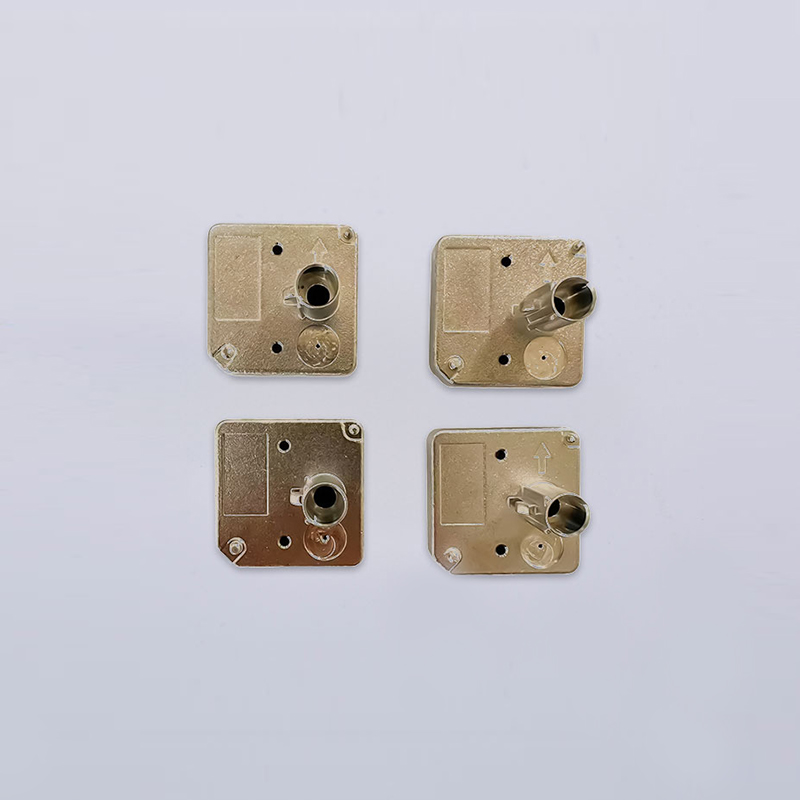
Cost Structure: Tooling Investment vs. Per-Unit Efficiency
Manufacturing cost analysis reveals fundamentally different economic profiles for cold forging and CNC machining. The choice depends on your production volume and timeline.
Tooling and Setup Investment
Cold forging requires significant upfront investment in custom dies and molds. Die fabrication costs typically range from $5,000 to $50,000 or higher depending on part complexity and die material. These dies must be engineered precisely to shape aluminum in seconds, requiring skilled tool and die makers. Design iterations mean additional die costs—modifying a die design can require partial or complete rebuilding.
Conversely, CNC machining requires no dedicated tooling investment. Once you load a part program into a machining center, you can begin production immediately. This eliminates the "tooling risk"—if your design changes or market demand shifts, you simply update the program. For prototypes and low-volume runs, this advantage is decisive.
Material Utilization and Waste
Cold forging achieves near-net shape geometry, meaning the forged part emerges from the die already close to final dimensions. Material utilization reaches approximately 95 percent—only minimal secondary finishing removes excess material. For a 100-gram aluminum forging, you consume roughly 105 grams of raw stock.
CNC machining, by contrast, removes 60 to 80 percent of raw material as chips. Machining a component from solid aluminum stock generates substantial scrap. A part that weighs 100 grams might require 400 to 500 grams of starting material. While aluminum is recyclable, the scrap handling and remelt costs add to overall component expense.
Per-Unit Cost Trajectory
| Production Volume | Cold Forging Cost Per Unit | CNC Machining Cost Per Unit |
|---|---|---|
| 100 pieces | $8.50 (high due to tooling) | $3.20 |
| 500 pieces | $2.80 (tooling amortized) | $3.15 |
| 5,000 pieces | $1.20 (tooling amortized) | $3.18 |
| 50,000+ pieces | $0.65 (high-speed production) | $3.18 (no economies of scale) |
The cost crossover typically occurs between 300 and 1,000 pieces, depending on part geometry and complexity. Below this threshold, CNC machining offers lower total cost. Above it, cold forging delivers dramatically superior unit economics and material efficiency.
Production Speed and Scalability: Cycle Time Versus Volume
Cycle Time and Output Rate
Cold forging operates at exceptional speed. Modern hydraulic and mechanical presses compress aluminum through dies in 2 to 8 seconds per part. A 600-ton extrusion press operating continuously can produce hundreds of forgings per hour. This high cycle rate means you can accumulate significant volume quickly—ideal for electronics manufacturers facing market demand windows.
CNC machining moves at a different pace. A complex thermal management component might require 15 to 45 minutes of machine time, plus tool changes, work-holding adjustments, and part inspection. Even relatively simple geometries consume 5 to 10 minutes per part. This translates to 6 to 12 parts per hour from a single machining center—roughly 50 to 100 times slower than forging.
Capacity and Lead Time
For high-volume orders—10,000 or 100,000 units—cold forging provides predictable lead times and guaranteed capacity. With multiple press lines operating in parallel, manufacturers can ramp production to meet demand. A supplier with 20 extrusion lines and cold forging capacity can absorb large orders without significant delay.
CNC machining faces bottlenecks at scale. If you need 50,000 precision parts in 8 weeks, you must access a large machine shop with numerous idle spindles—and even then, scheduling becomes complex. Machine tool availability becomes the limiting factor, not physical part difficulty.
Production Volume Suitability
- Prototypes and R&D runs (1 to 500 pieces): CNC machining excels. No tooling investment, immediate start, design flexibility.
- Pilot production (500 to 2,000 pieces): Hybrid approach becomes attractive. Use CNC for initial validation, then transition to forging as volume justifies die investment.
- Production volumes (2,000 to 1,000,000+ pieces): Cold forging dominates. Unit cost, speed, and scalability all favor forging once die investment is amortized.
Material Properties: Strength, Grain Structure, and Thermal Behavior
Manufacturing process profoundly shapes the metallurgical character of aluminum components. For electronics demanding both structural integrity and thermal performance, material properties matter as much as dimensional accuracy.
Grain Structure and Mechanical Strength
Cold forging deforms aluminum crystals under extreme pressure, aligning grain boundaries along stress flow lines. This directional grain structure follows the part's contour, concentrating material strength exactly where loads concentrate. The result: yield strength maximizes and fatigue resistance improves dramatically. Aluminum 7075 alloy—a high-strength choice for aerospace and automotive applications—reaches full mechanical potential only through forging.
CNC machining cuts through the natural grain indiscriminately. Each cutting tool passes slices through material, interrupting grain flow and creating microscopic stress concentration points. While the resulting part meets dimensional specifications, its strength ceiling remains lower than an equivalent forging. For components experiencing cyclic loads or vibration—common in electronics mounted on vehicles—this distinction becomes critical.
Thermal Conductivity and Heat Dissipation
Thermal management components—heat sinks, cold plates, thermal interface spreaders—must efficiently conduct heat from electronics to ambient air. Cold forging creates a continuous, pore-free structure with uninterrupted thermal pathways through the material. Research demonstrates that forged aluminum heat sinks achieve thermal conductivity up to 2.36 times superior to die-cast alternatives, with no internal voids or casting defects to impede heat flow.
CNC machined components carved from solid aluminum billets also provide good thermal properties—aluminum's inherent conductivity (160 to 210 W/mK depending on alloy) remains high. However, tool deflection during machining limits fin height and fin density. Thin, tall fins required for high-performance cooling experience tool chatter, requiring compromise in design. Forging encounters no such constraint—dies naturally form tall, closely-spaced fins.
Structural Integrity: Porosity and Defects
Cold forging produces dense, void-free material. The severe plastic deformation closes any internal cavities and ensures uniform density throughout the part. This characteristic matters for components experiencing pressure cycling or exposed to harsh environments.
CNC machining creates no porosity issues because material is removed rather than displaced. However, the grain disruption remains a concern for fatigue-critical applications. Conversely, for components where thermal conductivity dominates over fatigue resistance, CNC performance remains acceptable.
Dimensional Accuracy and Design Freedom
Tolerance Capabilities
Cold forging achieves typical tolerances of plus or minus 0.1 millimeters on most features. This level of precision suits many electronics applications. For tighter tolerances—plus or minus 0.02 millimeters—secondary CNC finishing is applied after forging. This hybrid approach combines forging's speed and cost advantage with machining's precision capability.
CNC machining delivers plus or minus 0.02 millimeter tolerances directly from the machine, without secondary operations. For applications requiring extremely tight dimensional control across multiple mating surfaces, CNC offers a single-process solution.
Geometric Complexity and Design Constraints
Cold forging operates within geometric constraints. Dies require draft angles—typically 1 to 3 degrees—to release parts after forming. Undercuts, internal cavities, and complex pockets that cannot be created without obstructing die withdrawal become impossible or require additional operations. Designers must think in terms of draft-friendly geometry.
CNC machining encounters virtually no geometric restrictions. Undercuts, complex cavities, internal threads, and multi-axis pockets all execute within a single machine cycle. For components with intricate cooling passages or complex mounting features, CNC offers freedom that forging cannot match.
Fin Design and Thermal Feature Density
Forged heat sinks can achieve fin height-to-spacing ratios up to 1:50—meaning a 50-millimeter tall fin separated by only 1 millimeter from its neighbor. Dies form these slender fins naturally. The geometry optimizes thermal performance.
CNC tool deflection limits fin aspect ratios to roughly 1:5 or 1:10. A cutting tool 5 millimeters in diameter cannot reach deeply into a 1-millimeter wide gap without deflecting or breaking. Designers compromise fin density to maintain tool integrity, reducing thermal performance.
Hybrid Manufacturing Approach
Sophisticated manufacturers combine both processes. Cold forging creates the bulk geometry and thermal pathways. CNC machining follows, refining critical mating surfaces, drilling precise holes, and cutting threads. This hybrid strategy captures the cost and performance benefits of forging while achieving the precision and complexity benefits of machining. For high-precision electronic components destined for volume production, this two-stage approach often represents the optimal solution.
Surface Finish and Post-Processing Requirements
Surface Quality and Aesthetic Appearance
Cold forging produces good surface finish directly from the die. The forged surface exhibits a micro-topography that typically requires minimal further treatment. While not polished, the as-forged finish presents a professional appearance suitable for many applications.
CNC machining delivers superior surface finish when appropriate feeds and speeds are maintained. The machined surface is characteristically smooth and uniform, suitable for direct painting or coating without intermediate finishing.
Anodizing and Corrosion Protection
Anodizing—the electrochemical process that grows a protective oxide layer on aluminum—performs best on forged parts. The dense, pore-free forged surface accepts anodize uniformly, producing consistent color and corrosion protection. The anodized layer bonds firmly to the underlying substrate, ensuring durability in harsh environments.
CNC machined parts anodize acceptably. Machined surfaces are clean of oxides, allowing good anodize adhesion. However, any subsurface defects or residual tool marks can create anodize inconsistencies. For electronics requiring cosmetic uniformity and consistent corrosion resistance, forged parts offer an advantage.
Post-Processing Workflow
Forged components typically flow through this post-processing sequence:
- Trimming and deburring (removing flash)
- Precision CNC finishing (if required)
- Surface cleaning and preparation
- Anodizing or powder coating
CNC components typically require only deburring and cleaning before coating, simplifying the post-processing chain. However, the single-machine removal of 60 to 80 percent material generates chip waste requiring handling and recycling logistics.
For electronics manufacturers operating integrated surface treatment facilities—anodizing lines and powder coating lines in-house—the forging plus finishing workflow becomes seamless and cost-effective. The combination of near-net shape forging with precision CNC refinement delivers components ready for assembly.
Application Suitability: Matching Process to Component Requirement
Electronic component categories each favor different manufacturing approaches. Understanding these distinctions ensures you select the process that optimizes performance, cost, and lead time for your specific application.
Prototypes and Rapid Design Iteration
Recommended Process: CNC Machining
R&D teams evaluating new component designs cannot afford the 4 to 12 week lead time required for die fabrication and tooling. CNC machining delivers prototype parts within 1 to 2 weeks. Multiple design iterations execute rapidly, allowing engineers to validate geometry, assembly interference, and thermal performance before committing to production tooling. For this phase—typically 1 to 500 pieces—CNC is the only practical choice.
Thermal Management Components
Recommended Process: Cold Forging
Heat sinks, cold plates, and thermal interface spreaders must maximize heat dissipation. Forging's superior thermal conductivity (2.36x better than die-cast alternatives), combined with its ability to form dense fin arrays at high aspect ratios, makes it the performance leader. Once you've validated design through CNC prototypes, transition production to cold forging. At volumes above 1,000 pieces, forging delivers both thermal and cost advantages.
Sensor Housings and Electronic Enclosures
Recommended Process: Hybrid (Cold Forging + CNC Finishing)
Sensor housings must protect delicate electronics from environmental contamination while providing mounting surfaces for PCBs and optical elements. Cold forging creates the structural shell economically, achieving the dense, corrosion-resistant material necessary for harsh automotive or industrial environments. CNC finishing then machines precise mounting bosses, threaded holes for fasteners, and optical alignment features. This two-stage approach combines material strength with dimensional precision.
High-Volume Structural Parts
Recommended Process: Cold Forging
Components manufactured in quantities exceeding 5,000 pieces annually, where material cost and production speed directly impact profitability, should flow through cold forging. Whether brackets, connectors, or support structures, the economics overwhelmingly favor forging. Tooling investment becomes negligible when amortized across such volumes, while superior material efficiency and production speed compound financial advantages.
Complex Multi-Axis Geometry
Recommended Process: CNC Machining
Components requiring undercuts, complex internal cavities, or intricate features that violate die draft requirements cannot economically flow through forging. CNC machining alone delivers the geometric freedom necessary. Accept the higher per-unit cost as the price of geometric complexity.
Implementation Strategy: Transitioning from Development to Production
The Optimal Pathway for Electronics Manufacturers
Successful electronics manufacturers employ a deliberate progression:
- Phase 1 - Design Validation (Months 1-3): Utilize CNC machining to produce 10 to 50 prototype units. Validate electrical performance, thermal characteristics, and assembly compatibility. Iterate design based on testing results.
- Phase 2 - Pilot Production (Months 4-6): Manufacture 500 to 2,000 units via CNC while initiating die design and tooling fabrication in parallel. Confirm supply chain logistics and validate assembly processes.
- Phase 3 - Production Transition (Months 7-12): As dies complete fabrication and testing, begin cold forging trial runs. Compare forged pilot parts against CNC benchmarks—validate thermal performance, mechanical properties, and surface quality. Ramp forging production gradually while reducing CNC volumes.
- Phase 4 - Full-Rate Production (Month 12+): Transition entirely to cold forging for high-volume production, with CNC reserved for design changes, low-volume variants, or precision finishing of forged blanks.
This phased approach manages risk, validates performance across both processes, and ensures you launch volume production only after comprehensive validation. Manufacturers operating vertically integrated facilities—controlling both forging presses and CNC centers—execute this transition most efficiently.
Quality Assurance Throughout the Transition
Component validation must address process-specific quality concerns:
- Mechanical testing confirms grain flow optimization in forgings (tensile strength, yield, elongation)
- Thermal imaging validates heat dissipation pathways in forged heat sinks
- Dimensional CMM checks ensure forging dies maintain specified tolerances across production runs
- Surface analysis (SEM) confirms dense, void-free microstructure in forged components
- Accelerated corrosion testing (salt spray) validates anodize quality on forged parts
Conclusion: Aligning Manufacturing Strategy with Business Objectives
The cold forging versus CNC machining decision is not binary—it is contextual. The optimal choice depends on production volume, thermal requirements, geometric complexity, and development timeline.
Select CNC machining when: you require rapid prototyping, anticipate frequent design changes, or need complex geometries with undercuts. Expect higher per-unit costs but gain flexibility and accelerated time-to-market.
Select cold forging when: you face volumes exceeding 1,000 to 2,000 pieces annually, demand superior thermal performance, require maximum material efficiency, or prioritize structural strength. Accept the tooling investment and longer initial lead time to capture significant per-unit cost savings and performance advantages.
Pursue hybrid manufacturing when: you combine forging's material properties and speed with CNC's precision and flexibility. Create forged blanks at scale, then apply precision finishing where design complexity demands it. This balanced approach captures the strengths of both processes.
Electronics manufacturers serving automotive, industrial, and telecommunications sectors increasingly recognize this truth: the most cost-effective, performance-optimized components emerge from integrated facilities combining cold forging capability with precision CNC machining and in-house surface treatment. These manufacturers control the entire value chain—from raw aluminum ingot through final anodized component. They can pivot between processes as demand and technology evolve, maintaining competitive advantage.
As you evaluate your next generation of electronic components, consult with manufacturing partners offering both capabilities. Request comparative samples—forged and machined variants of your part—and test them rigorously. Let performance data, not tradition or assumption, guide your process selection. The result will be components optimized for cost, performance, and reliability.
Frequently Asked Questions
Q1: What is the typical break-even volume where cold forging becomes more cost-effective than CNC machining?
The break-even point typically occurs between 300 and 1,000 pieces, depending on part complexity and material cost. Simple, relatively small components may reach cost parity at lower volumes, while large or geometrically complex parts may require higher volumes. Requesting detailed cost quotations from manufacturers serving both processes provides the most accurate break-even analysis for your specific component.
Q2: Can cold-forged aluminum components achieve the same dimensional tolerances as CNC machined parts?
Cold forging typically produces tolerances of plus or minus 0.1 millimeter as-forged. Tighter tolerances (plus or minus 0.02 millimeter) require secondary CNC finishing. By combining forging with precision finishing, manufacturers achieve CNC-level accuracy while retaining forging's speed and cost advantages.
Q3: Which process is better for thermal management components like heat sinks?
Cold forging excels for thermal management. Its continuous grain structure ensures uninterrupted heat pathways, achieving thermal conductivity up to 2.36 times superior to die-cast alternatives. Additionally, forging forms high-aspect-ratio fins (up to 1:50) far more efficiently than CNC tooling. For volume production of heat sinks, forging delivers both thermal and economic advantages.
Q4: What are the key design constraints I should consider when designing components for cold forging?
Cold forging requires draft angles (typically 1 to 3 degrees) to release parts from dies. Undercuts and complex internal features are not feasible unless achieved through secondary operations. Wall thickness should remain relatively uniform to ensure complete metal flow during forging. Working with experienced forging engineers during design phase ensures your part geometry optimizes both performance and manufacturability.
Q5: How long does the die design and fabrication process typically require?
Die design and fabrication typically requires 4 to 12 weeks, depending on complexity. Simple cylindrical or rectangular forgings may complete in 4 to 6 weeks, while complex shapes with multiple forming stages may extend to 12 weeks or beyond. This timeline is critical for production planning—it represents the lead time before you can transition from CNC to forged production.
Q6: Can CNC machining produce the same structural properties as cold forging?
CNC machining cannot replicate forging's grain flow alignment and fatigue resistance. Machining cuts through natural grain boundaries indiscriminately, creating stress concentration points that reduce mechanical strength compared to forged equivalents. For applications experiencing cyclic loading or vibration, forged components provide superior reliability and longevity.
Q7: How does material utilization differ between the two processes?
Cold forging achieves approximately 95 percent material utilization—minimal waste. CNC machining removes 60 to 80 percent of raw material as chips. A 100-gram forged part consumes roughly 105 grams of stock, while the equivalent machined part consumes 400 to 500 grams. This difference substantially impacts material costs and environmental footprint at scale.
Q8: What post-processing requirements differ between forged and machined components?
Forged parts typically require trimming (flash removal), surface cleaning, and anodizing or coating. CNC machined parts need deburring and cleaning before coating. Forged parts benefit from anodizing on their dense, pore-free surface, achieving consistent color and corrosion protection. Both processes anodize successfully, but forged parts often demonstrate superior anodize uniformity.
Q9: What is the advantage of hybrid manufacturing combining forging and CNC machining?
Hybrid manufacturing leverages forging's speed, cost efficiency, and material properties for the bulk component, then applies CNC machining's precision for critical features—mounting surfaces, threaded holes, tight-tolerance interfaces. This approach captures the economic and performance strengths of both processes, making it particularly valuable for complex electronic components destined for volume production.
Q10: Which aluminum alloys are suitable for cold forging, and do they affect the decision between processes?
Aluminum alloys 1050, 1070, 6061, 6063, and 7075 all forge successfully. High-strength alloys like 7075 particularly benefit from forging, as the process optimizes their yield strength through grain alignment. Both processes accommodate these alloys, but forging enables fuller realization of high-strength alloy potential. Consult with your manufacturing partner regarding alloy suitability for your application.

-
Tel Number
+86-0572-2210226Phone Number
+86-13819283977 +86-13655726561 +86-13567228000Address
Building B, Innovation and Entrepreneurship Industrial Park, No. 288, Yansan Road, Huzhou City, Zhejiang Province, ChinaQrCode
-
Quick Links
Home Products About Us Capabilities Industries News Contact Us -
Explore
Aluminum Camera Shell Of Vehicle Aluminium Cold Extrusion Aluminium Cold Forging Parts -
feel free to contact us
