

 English
  日本語
日本語  Deutsch

Industry News
 Aug 14, 2026
 Posted by Administrator
How a Chinese Aluminum Precision Manufacturer Produces 30 Million Units Yearly and Supplies Jaguar Land Rover
Manufacturing Excellence at Scale
The modern automotive and electronics industries demand more than just production capacity. They require precision, reliability, and the ability to scale without compromising quality. At the heart of this challenge lies Longto Precision Industry (Zhejiang) Co., Ltd., a manufacturer that has quietly built one of Asia's most capable aluminum processing ecosystems.
Every year, this facility produces over 30 million components. These aren't simple stamped parts. They're precision-engineered aluminum pieces that meet stringent international specifications, exported to markets across the United Kingdom, Germany, Japan, and the United States.
By the Numbers
- 3,000,000+ components annually
- 100+ skilled engineers and technicians
- 300+ million RMB annual production value
- 20 dedicated extrusion production lines
- 5 surface treatment systems
The Foundation: Advanced Manufacturing Infrastructure
Producing 30 million precision components annually isn't achieved through ambition alone. It requires systematic investment in equipment, talent, and process discipline. As an aluminum alloy components manufacturer, this operation has developed a vertically integrated production ecosystem that can handle everything from raw extrusion to final assembly.
Extrusion Capacity: The Core Engine
The extrusion division represents the backbone of production capability. Twenty production lines operate simultaneously, ranging from 600-ton to 6,000-ton capacity presses. This diversity serves a critical purpose: different components require different forces and techniques.
For lightweight automotive structures, smaller presses deliver the precision needed. For load-bearing components, the 6,000-ton equipment provides the force necessary to achieve exact dimensional tolerances. The result is a production system that rarely encounters a specification it cannot execute.
Surface Treatment Systems
Raw extruded aluminum is only the beginning. To meet automotive standards and environmental regulations, components undergo sophisticated finishing processes:
- Two anodizing lines apply protective oxide layers that improve corrosion resistance
- Three powder coating systems deliver decorative and functional finishes in various colors and specifications
- Custom finishing protocols accommodate client-specific requirements
These systems aren't merely decorative. Anodizing and powder coating extend component lifespan, reduce maintenance requirements, and enable manufacturers to meet strict environmental compliance standards across different markets.
Precision Machining Division
After extrusion and initial finishing, many components require precision machining. The facility operates a comprehensive machine shop equipped with:
- CNC machining centers for complex geometries
- Milling machines for feature work
- Turning lathes for cylindrical components
- Drilling systems for precise hole placement
- Punching equipment for rapid material removal
This equipment performs secondary operations that transform semi-finished extrusions into final, ready-to-assemble parts. Tolerances maintained routinely range from ±0.1mm to ±0.05mm depending on specifications.
Integrated Supply Chain Management
Few aluminum manufacturers operate in isolation. This facility maintains long-term partnerships with suppliers of complementary materials:
- Plastic component manufacturers for assembled units
- Stainless steel suppliers for hardware and fasteners
- Specialized coating and plating vendors for advanced finishes
Rather than forcing clients to coordinate multiple vendors, the facility functions as a single-source supplier, coordinating component integration and delivery logistics.
Quality Standards and International Certification
Producing volume is one achievement. Meeting the exacting standards of global automotive manufacturers represents an entirely different tier of capability.
Automotive Grade Manufacturing
The facility operates under stringent quality protocols that exceed standard industrial requirements. Every component undergoes dimensional verification, surface inspection, and performance testing before shipment. Statistical process control systems continuously monitor output against target specifications.
This commitment to quality has enabled direct supply relationships with premium automotive manufacturers. Components produced here operate in demanding environments: exposed to temperature variations, vibration, moisture, and structural stresses that require materials and manufacturing processes of exceptional consistency.
Global Regulatory Compliance
Different markets impose different requirements. European regulations differ from North American standards, which differ from Asian specifications. The facility maintains comprehensive compliance documentation and testing protocols that enable shipment to all major industrial markets:
- Dimensional tolerance verification per international standards
- Material composition analysis and certification
- Surface treatment durability testing
- Environmental compliance documentation
- Traceability and batch control systems
This multi-market compliance capability eliminates a major barrier for international clients: the need to coordinate with multiple suppliers operating under different standards.
Continuous Improvement Programs
Quality isn't static. The facility maintains ongoing programs to refine processes, reduce waste, and improve consistency. These initiatives focus on:
- Operator training and skill development
- Equipment maintenance and calibration
- Process parameter optimization
- Waste reduction and material efficiency
- Defect analysis and root cause correction
The result is a manufacturing operation that continuously delivers tighter tolerances, faster cycle times, and higher yields year over year.
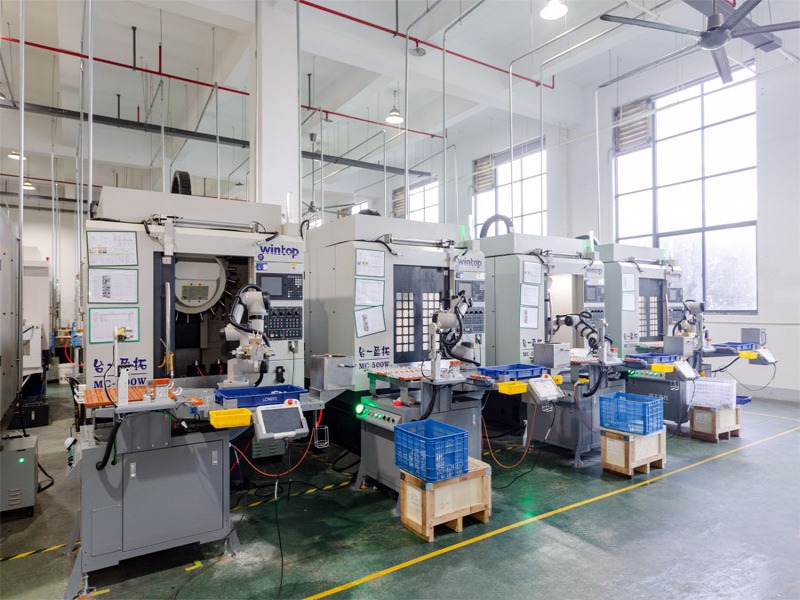
Global Market Presence and Export Success
A manufacturing facility can possess world-class equipment and skilled staff, but international presence requires more: established relationships, export logistics expertise, and proven ability to serve diverse customer bases across continents.
Geographic Market Expansion
The facility's export portfolio spans multiple continents and regulatory environments. Current markets include:
- United Kingdom and Europe: Direct supply relationships with premium automotive manufacturers
- Germany: Technical component supply for precision engineering applications
- Japan: High-precision electronic and automotive components
- United States: Specialized aluminum alloy products and assemblies
Each market presents unique challenges. British customers operate under one set of standards and delivery expectations. Japanese clients maintain different quality emphasis and communication protocols. American manufacturers require different compliance documentation. Successfully serving all four markets simultaneously demonstrates operational sophistication.
Product Specialization by Market
Rather than treating all markets identically, the facility has developed market-specific product lines:
| Market Region | Primary Applications | Key Product Type |
|---|---|---|
| United Kingdom | Automotive structural components | Extruded and machined assemblies |
| Germany | Precision engineering and industrial | High-tolerance machined components |
| Japan | Electronics and sensor systems | Precision-finished assemblies |
| United States | Industrial and specialized applications | Custom engineered solutions |
Cold Extrusion Technology: New Market Frontiers
Beyond traditional hot extrusion, the facility has invested in cold extrusion technology, a more advanced manufacturing process that produces components with superior surface finish and dimensional accuracy. Cold extrusion requires:
- Specialized die design and engineering
- Precise temperature control
- Advanced lubrication systems
- High-pressure forming equipment
Products manufactured through cold extrusion have already penetrated competitive markets in Britain and America, opening access to applications requiring the highest precision standards. This technology positions the facility for growth in emerging sectors requiring sophisticated manufacturing capabilities.
Applications and Industry Integration
Understanding production capabilities in isolation provides incomplete perspective. The real measure of a manufacturing partner lies in understanding how components perform within end-use applications.
Automotive Sector Applications
The facility's most demanding market represents the automotive industry. Aluminum components produced here serve critical functions in vehicle construction, contributing to:
- Weight reduction: Aluminum components enable lighter vehicle structures, improving fuel efficiency and performance
- Structural integrity: Precision-engineered components maintain exact tolerances essential for vehicle assembly and longevity
- Thermal management: Aluminum's thermal properties make it ideal for cooling systems and heat dissipation applications
- Cost efficiency: Mass-produced components achieve economies of scale without sacrificing quality
Electronics and Sensor Systems
Beyond automotive, aluminum components find critical applications in electronics manufacturing:
- Precision housings for sensor systems
- Thermal dissipation structures for high-performance electronics
- Structural components for autonomous driving systems
- Enclosures for advanced telecommunications equipment
Artificial Intelligence and Smart Systems
Emerging applications in artificial intelligence and machine learning systems require components with unprecedented precision and reliability. The facility's capabilities support these emerging sectors through:
- Precision mounting structures for sensor arrays
- Thermally optimized housings for computing equipment
- High-precision mechanical components for robotic systems
- Electromagnetic shielding components for sensitive electronics
Innovation and Future Development
Manufacturing excellence in the present doesn't guarantee relevance in the future. The facility has recognized emerging trends and is actively positioning itself to serve next-generation industries.
Process Innovation: Cold Extrusion Leadership
Cold extrusion represents a technological leap beyond conventional hot extrusion. The process delivers superior surface quality, tighter tolerances, and enhanced mechanical properties. The facility's investment in cold extrusion positions it ahead of competitors still relying on traditional methods.
Cold extrusion requires more sophisticated equipment, skilled operators, and rigorous process control. These investments signal commitment to serving customers with the most demanding specifications. Successfully implementing this technology demonstrates capability to adopt cutting-edge manufacturing processes.
Material Science and Alloy Development
Not all aluminum alloys perform identically. Different applications require different material compositions. The facility works with suppliers and customers to select optimal alloy specifications for each application, considering factors including:
- Strength-to-weight ratios required by specific applications
- Corrosion resistance in various environments
- Thermal conductivity for heat dissipation applications
- Electrical conductivity for specialized electronic applications
- Cost-performance optimization across product lines
Industry 4.0 Capabilities
Modern manufacturing increasingly integrates digital systems for monitoring, control, and optimization. The facility continues upgrading production systems to enable:
- Real-time production monitoring and data collection
- Predictive maintenance systems for equipment
- Quality control automation and statistical tracking
- Supply chain visibility and inventory management
- Advanced analytics for process optimization
Sustainable Manufacturing Practices
Environmental considerations increasingly influence purchasing decisions. The facility implements sustainability initiatives including:
- Aluminum recycling and scrap reduction programs
- Energy-efficient equipment and processes
- Waste minimization and material recovery
- Environmental compliance and reporting
- Supply chain sustainability assessment
Core Manufacturing Capabilities: Technical Specifications
Extrusion Equipment Matrix
The extrusion division operates across a wide range of equipment sizes to accommodate diverse production requirements:
| Equipment Class | Press Tonnage | Primary Applications | Units Available |
|---|---|---|---|
| Entry-Level | 600-1200 tons | Precision profiles, small components | 4 units |
| Mid-Range | 2000-3500 tons | General production, medium components | 10 units |
| Heavy-Duty | 4500-6000 tons | Large structures, demanding specifications | 6 units |
Surface Treatment Specifications
After extrusion, components proceed through finishing operations that impart protective and aesthetic properties:
- Anodizing (2 lines): Creates protective oxide layers in thickness ranges from 5 to 100 microns, supporting Type II, Type III, and specialized specifications
- Powder Coating (3 lines): Applies custom color finishes with durability ratings meeting automotive and industrial standards
- Custom Finishing: Specialized anodizing colors, electroplating, and proprietary treatments for customer-specific requirements
Precision Machining Tolerances
The machining division maintains tight tolerance capabilities across diverse operations:
- Standard machining tolerances: ±0.1mm
- Precision machining tolerances: ±0.05mm
- Ultra-precision machining capabilities: ±0.025mm for specialized applications
- Surface finish control: Ra 0.2-3.2 microns depending on application requirements
Partnership Model and Customer Integration
Manufacturing excellence functions best when aligned with clear understanding of customer needs, market expectations, and collaborative problem-solving approaches.
Collaborative Engineering Model
Rather than treating customers as order-takers, the facility operates under a partnership philosophy. This approach includes:
- Early design-phase engagement to optimize manufacturability
- Technical consultation on material selection and process optimization
- Cost analysis and value engineering to improve economics
- Quality assurance through design and process reviews
- Ongoing performance monitoring and continuous improvement
Supply Chain Integration
Customers increasingly demand single-source supply solutions rather than coordinating multiple vendors. The facility's integrated ecosystem enables:
- Coordinated component supply from aluminum extrusion through final assembly
- Integration with plastic component manufacturers for complete assemblies
- Coordination with steel and stainless suppliers for fastener integration
- Quality control across the entire integrated supply chain
- Simplified logistics and delivery coordination
Technical Support and Problem-Solving
Quality issues inevitably arise in manufacturing. The facility's approach to problem-solving reflects commitment to long-term partnerships:
- Rapid response to quality concerns or performance issues
- Root cause analysis and corrective action implementation
- Engineering support for process adjustments or design modifications
- Continuous documentation and performance tracking
- Collaborative innovation for emerging challenges
Competitive Advantages and Market Positioning
Scale Without Compromising Quality
Many manufacturers face a fundamental trade-off: larger volumes often compromise quality and precision. This facility has broken that paradigm. Thirty million components annually can be produced while maintaining the dimensional accuracy and surface quality that premium manufacturers demand.
This capability emerges from systematic investment in equipment, process discipline, skilled personnel, and quality systems. It cannot be achieved through shortcuts or cost-cutting.
Vertical Integration Advantages
Most aluminum manufacturers focus exclusively on extrusion. This facility vertically integrates across the entire production spectrum: extrusion, surface treatment, precision machining, quality control, and component integration. This integration delivers:
- Quality consistency across all production phases
- Faster turnaround times through internal coordination
- Cost efficiency through reduced vendor coordination and logistics
- Technical capability across diverse manufacturing disciplines
- Flexible capacity allocation to optimize customer service
Global Quality Standards with Local Manufacturing
Customers gain access to European and American quality standards without extended lead times or international logistics complexity. Manufacturing occurs locally in China while meeting international specifications, enabling competitive pricing without quality compromise.
Supply Chain Reliability
The facility's established relationships with material suppliers, component manufacturers, and logistics partners ensure reliability. Customers receive consistent delivery, predictable quality, and responsive support—critical factors in just-in-time manufacturing environments.
Frequently Asked Questions
Q1: What is the minimum order quantity for custom aluminum components?
Minimum order quantities vary based on product complexity and customization requirements. Simple standard profiles accommodate smaller volumes, while custom components typically require larger orders to justify tooling investments. Contact the facility directly to discuss specific requirements and volume thresholds for your application.
Q2: How long does typical production take from order to delivery?
Lead times depend on product complexity, order volume, and current production schedule. Standard catalog items may ship within weeks, while custom-engineered components require additional time for design review, tooling preparation, and quality validation. Planning typically requires 8-12 weeks for complex custom work, though expedited arrangements may be possible for premium customers.
Q3: What quality certifications and testing does the facility maintain?
The facility operates under strict quality protocols including dimensional verification, material composition analysis, surface treatment durability testing, and environmental compliance documentation. Specific certifications depend on customer requirements and target markets. Quality assurance extends across all production phases from raw material inspection through final component testing.
Q4: Can the facility accommodate design changes or modifications during production?
Engineering flexibility represents a core competitive advantage. The facility works collaboratively with customers to implement design modifications, process adjustments, or specification changes when required. Early notification enables integration of changes without major production delays, though extensive modifications may impact timelines and costs.
Q5: What payment and logistics arrangements are available for international customers?
The facility has extensive experience managing international transactions including standard commercial payment terms, wire transfers, and letter of credit arrangements. Logistics partnerships enable reliable delivery to customers worldwide, with options for freight consolidation, containerized shipment, or air freight based on urgency and volume requirements.
Q6: How does the facility handle prototype development and small volume production?
Prototype development and low-volume production receive dedicated attention. The facility maintains equipment and expertise to produce samples, conduct performance testing, and validate designs before committing to full-scale production. This capability enables customers to minimize risk when launching new products or entering new markets.
Q7: What sustainability measures are integrated into manufacturing operations?
Sustainability initiatives encompass aluminum recycling, energy-efficient equipment, waste minimization, and environmental compliance. The facility recognizes that customers increasingly prioritize sustainability in supplier selection. Manufacturing processes incorporate environmental considerations without compromising quality or cost-effectiveness.
Q8: Can the facility serve customers requiring just-in-time delivery?
Yes. The facility's scale and integrated operations enable flexible capacity management and responsive scheduling. Established customers can access just-in-time or kanban delivery arrangements, with frequent small shipments replacing large periodic orders. This capability requires production planning and coordination but delivers significant value for customers managing lean manufacturing systems.

-
Tel Number
+86-0572-2210226Phone Number
+86-13819283977 +86-13655726561 +86-13567228000Address
Building B, Innovation and Entrepreneurship Industrial Park, No. 288, Yansan Road, Huzhou City, Zhejiang Province, ChinaQrCode
-
Quick Links
Home Products About Us Capabilities Industries News Contact Us -
Explore
Aluminum Camera Shell Of Vehicle Aluminium Cold Extrusion Aluminium Cold Forging Parts -
feel free to contact us
