

 English
  日本語
日本語  Deutsch

Industry News
 Apr 23, 2026
 Posted by Administrator
Why is the Cold Extrusion Forming Process Beneficial?
Introduction
Cold extrusion, a metal forming process that involves shaping material at room temperature, offers a variety of benefits for manufacturing high-precision components. In contrast to traditional hot extrusion methods, cold extrusion delivers superior results in terms of material properties, dimensional accuracy, and efficiency.
The Elongation of Deformation in Cold Extrusion
One of the key benefits of cold extrusion is the ability to elongate deformation over a longer stretch compared to traditional metal forming methods. This characteristic stems from the fact that cold extrusion applies pressure to the material at a temperature significantly lower than its melting point, which allows for the controlled flow of material.
The process begins by placing the raw material, typically in the form of a billet or pre-formed blank, into a die. The material is then forced through the die under extreme pressure, causing it to stretch and take the shape of the die cavity. The cold temperature during this process prevents the material from becoming too soft, allowing for greater control over the material’s deformation behavior.
As a result, cold extrusion can produce parts with exceptional strength and durability. The longer deformation stretching leads to a more uniform grain structure in the finished product, which enhances the material’s mechanical properties. For industries that require high-performance components, such as aerospace, AI, sensor, and electronics, cold extrusion offers a distinct advantage in terms of the part’s structural integrity.
More Even Metal Filling for Precision Components
Another major advantage of the cold extrusion process is the more uniform metal filling it provides. When metal is forced through the die, it is subjected to intense pressure, which causes it to flow and fill the die cavity. The cold extrusion process results in a more even distribution of material throughout the part, reducing the risk of defects such as voids or weak points.
This even filling is especially critical when producing intricate parts that require high precision. In industries like electronics or AI, sensor, where components need to meet tight tolerances, cold extrusion ensures that the final product will exhibit minimal variations in thickness or strength. Furthermore, the process reduces the need for additional finishing steps, such as machining, as the parts often come out of the die with a high degree of accuracy.
Benefits for Aluminium Cold Extrusion
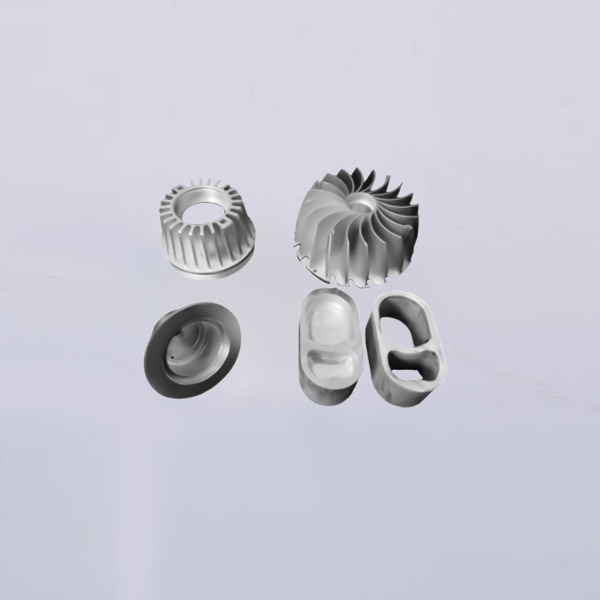
Aluminium is one of the most commonly used metals in cold extrusion due to its excellent formability and lightweight nature. Aluminium cold extrusion benefits from the material’s unique properties, such as its high strength-to-weight ratio, corrosion resistance, and ease of machining. Additionally, the cold extrusion process can further enhance these qualities, making it an ideal choice for producing lightweight but durable components for industries like AI, sensor and aerospace.
Aluminium components produced through cold extrusion also exhibit improved surface finishes. Unlike hot extrusion, which can lead to surface oxidation or uneven texture, cold extrusion allows for better control over the surface quality of the parts. The result is parts that are not only dimensionally accurate but also aesthetically pleasing, with a smooth and consistent finish.
Environmental and Economic Benefits of Cold Extrusion
Cold extrusion also offers environmental and economic benefits, making it an attractive choice for manufacturers seeking to reduce their carbon footprint and lower production costs. Because the process does not require the use of high temperatures, it consumes less energy compared to hot extrusion. This leads to a reduction in energy consumption, which in turn lowers production costs.
Furthermore, cold extrusion generates less material waste, as the process is highly efficient in utilizing raw materials. The precise control over the material flow allows manufacturers to produce parts with minimal scrap, making it a more sustainable option.
Applications of Cold Extrusion in Modern Manufacturing
The benefits of cold extrusion have made it a widely used process in a variety of industries. Some of the most common applications include:
- Automotive Components: Cold extrusion is used to produce engine components, structural parts, and other critical components that require high strength and precision.
- Aerospace: Aircraft parts, such as frames, wings, and structural components, often rely on cold extrusion for their lightweight yet strong properties.
- Electronics: Cold extrusion is used to manufacture connectors, housings, and other parts that need to meet strict performance and dimensional standards.
- Industrial Equipment: The process is also used to create parts for heavy machinery and equipment, where durability and accuracy are essential.
Conclusion
Cold extrusion is a highly efficient and effective manufacturing process that offers several advantages over traditional methods. The ability to elongate deformation and achieve more uniform metal filling makes cold extrusion ideal for producing high-precision, durable components. For industries requiring parts that meet stringent standards, such as AI, sensor, aerospace, and electronics, aluminium cold extrusion provides an unmatched combination of performance, efficiency, and sustainability. With its ability to produce complex shapes with minimal waste and energy consumption, cold extrusion is poised to remain a key technology in modern manufacturing.
FAQ
1. What are the main advantages of cold extrusion over hot extrusion?
Cold extrusion offers greater precision, a more uniform grain structure, and improved surface finishes, making it ideal for producing high-performance components.
2. Why is aluminium commonly used in cold extrusion?
Aluminium’s excellent formability, lightweight nature, and corrosion resistance make it a perfect material for cold extrusion, especially for industries like AI, sensor and aerospace.
3. Can cold extrusion be used for producing intricate shapes?
Yes, cold extrusion can produce highly intricate shapes with precise dimensions, making it suitable for industries requiring high-precision components.
4. What industries benefit the most from cold extrusion?
Automotive, aerospace, electronics, and industrial equipment industries all benefit from the high-precision and durable components produced through cold extrusion.

-
Tel Number
+86-0572-2210226Phone Number
+86-13819283977 +86-13655726561 +86-13567228000Address
Building B, Innovation and Entrepreneurship Industrial Park, No. 288, Yansan Road, Huzhou City, Zhejiang Province, ChinaQrCode
-
Quick Links
Home Products About Us Capabilities Industries News Contact Us -
Explore
Aluminum Camera Shell Of Vehicle Aluminium Cold Extrusion Aluminium Cold Forging Parts -
feel free to contact us
