

 English
  日本語
日本語  Deutsch

Industry News
 Jul 17, 2026
 Posted by Administrator
Modular Framing for Robotics: Why Choose Slotted Aluminum Extrusions?
Understanding the Role of Extruded Aluminum in Robotics Framing
Robotics platforms depend on structural frameworks that can be adjusted, reconfigured, and scaled without redesigning the entire chassis. Slotted aluminum profiles, produced through aluminium cold extrusion, provide this flexibility while maintaining dimensional accuracy across long production runs. Unlike welded steel frames, extruded aluminum systems allow engineers to add or remove components using standard fasteners and channel nuts, which shortens iteration cycles during prototyping and field testing.
The demand for modular framing has grown alongside the expansion of collaborative robots, automated guided vehicles, and sensor-heavy inspection systems. Each of these applications benefits from a frame that can be modified as payloads, sensors, or actuators change over a product lifecycle.
How Cold Extrusion Differs From Hot Extrusion
Extrusion processes are generally divided by the temperature at which the aluminum billet is formed. Cold extrusion aluminum processing pushes metal through a die at or near room temperature, while hot extrusion heats the billet to several hundred degrees before shaping. Each method produces different mechanical and surface characteristics.
| Factor | Cold Extrusion | Hot Extrusion |
|---|---|---|
| Forming Temperature | Near ambient | Elevated, softened billet |
| Surface Finish | Smoother, less oxidation | Requires additional finishing |
| Grain Structure | Refined, work-hardened | Coarser unless heat treated |
| Typical Use | Small precision components | Long structural profiles |
| Dimensional Tolerance | Tighter as-formed | Wider, often needs machining |
For robotics parts that require tight tolerances without secondary machining, aluminum cold extrusion is often selected because the process work-hardens the material and reduces the need for post-processing correction.
Key Advantages of Slotted Aluminum Framing for Robotic Systems
- Reconfigurable mounting points along the full length of each profile
- Reduced structural weight compared to steel framing of similar rigidity
- Corrosion resistance suitable for cleanroom and outdoor deployments
- Compatibility with standardized brackets, panels, and linear motion components
- Simplified disassembly for maintenance or transport
Engineering teams working on mobile robot chassis frequently report that t-slot systems cut assembly time significantly compared to custom-welded alternatives, since components can be repositioned without cutting or re-welding the frame.
Typical Cold Extrusion Production Flow
Each stage in the sequence influences the final dimensional accuracy of the slotted profile. Consistent lubrication and controlled die pressure are particularly important for maintaining uniform slot geometry across production batches.
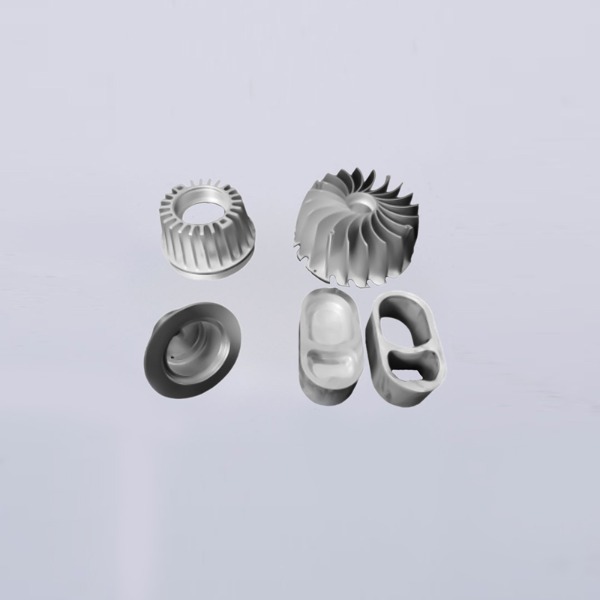
Application Areas Where Slotted Extrusions Add Value
Sensor Mounting and Enclosures
Robotics platforms that carry cameras, lidar, or proximity sensors benefit from precision aluminum extrusion profiles because sensor brackets can be repositioned as calibration requirements change. Tight tolerance channels reduce vibration-induced misalignment during operation.
Thermal Management
Heat sink extrusion profiles, often produced with fin geometries integrated directly into the extrusion die, are used to dissipate heat from motor drivers and control electronics housed within the same modular frame.
Automotive Component Testing Rigs
Custom aluminum extrusion for automotive parts testing benefits from modular framing because test fixtures often need reconfiguration between vehicle models or component variants.
Selecting the Right Profile Specification
Choosing a slot size and wall thickness depends on the load the frame will carry and the environment it will operate in. The following considerations are commonly reviewed with an aluminum extrusion manufacturer or aluminum extrusion supplier before finalizing a design.
| Consideration | Why It Matters |
|---|---|
| Slot Width | Determines compatible fastener and bracket hardware |
| Wall Thickness | Affects load capacity and resistance to deflection |
| Alloy Grade | Influences strength, machinability, and corrosion resistance |
| Surface Treatment | Anodized aluminum extrusion profiles improve wear resistance |
| Machining Needs | Aluminum extrusion with CNC machining adds precise cutouts |
Modular framing is not just about convenience during assembly. It directly affects how quickly a robotics team can iterate on mechanical design without committing to a fixed structural layout.
Surface Finishing and Machining Considerations
Raw extruded profiles often require additional processing before integration into a robotics frame. Anodizing improves surface hardness and provides electrical insulation between mating parts, which is useful in electronics-dense assemblies. CNC machining is frequently added to create precise mounting holes, cable pass-throughs, or custom end connections that standard extrusion alone cannot produce.
- Deburring and cleaning of extruded surfaces
- Anodizing or powder coating for corrosion resistance
- CNC drilling or tapping for hardware attachment points
- Final dimensional inspection against drawing tolerances
Summary of Structural Trade-offs
No single framing approach suits every robotics application. The table below outlines common trade-offs engineering teams weigh when comparing slotted aluminum extrusion against alternative structural approaches.
| Approach | Strength | Flexibility | Weight |
|---|---|---|---|
| Slotted Aluminum Extrusion | Moderate to High | High | Low |
| Welded Steel Frame | High | Low | High |
| Machined Aluminum Plate | High | Low | Moderate |
| Composite Panel Frame | Moderate | Moderate | Low |
Frequently Asked Questions
Q1: What distinguishes cold extrusion aluminum from standard hot extrusion methods?
Cold extrusion forms aluminum near room temperature, producing a smoother finish and refined grain structure, while hot extrusion softens the billet with heat and is typically used for longer structural profiles that will undergo additional finishing.
Q2: Why are slotted profiles preferred over solid bar stock for robotics frames?
Slotted profiles allow brackets, panels, and sensors to be mounted or repositioned anywhere along the channel length without drilling new holes, which supports iterative design changes common in robotics development.
Q3: Does anodizing affect the mechanical strength of an extruded profile?
Anodizing primarily changes the surface layer for corrosion and wear resistance and has minimal effect on the underlying structural strength of the extruded aluminum.
Q4: Can extruded profiles be combined with CNC machining for custom connections?
Yes, aluminum extrusion with CNC machining is commonly used to add precise holes, slots, or end fittings that are not part of the original extrusion die profile.
Q5: What alloy properties matter most for structural robotics framing?
Yield strength, corrosion resistance, and machinability are the most relevant properties, with the specific balance depending on whether the frame prioritizes load capacity or weight reduction.

-
Tel Number
+86-0572-2210226Phone Number
+86-13819283977 +86-13655726561 +86-13567228000Address
Building B, Innovation and Entrepreneurship Industrial Park, No. 288, Yansan Road, Huzhou City, Zhejiang Province, ChinaQrCode
-
Quick Links
Home Products About Us Capabilities Industries News Contact Us -
Explore
Aluminum Camera Shell Of Vehicle Aluminium Cold Extrusion Aluminium Cold Forging Parts -
feel free to contact us
